

Currently Empty: CFA0.00



Blog
The Ultimate Guide to Choosing Your Perfect 2K FPV Drone
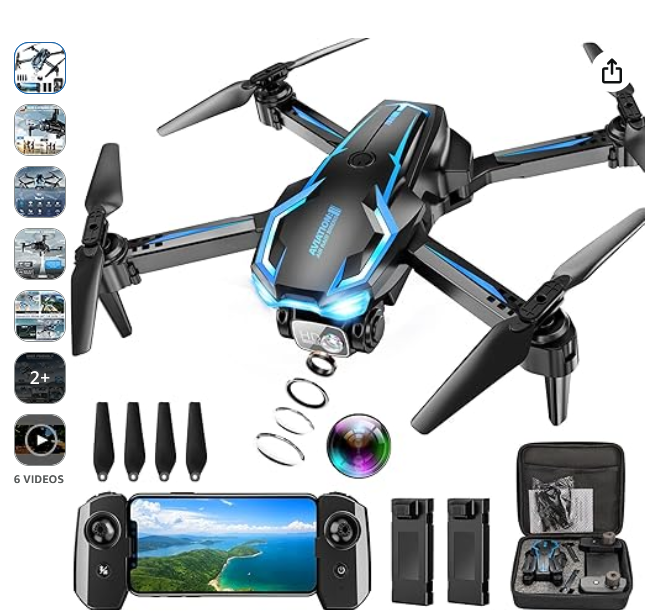
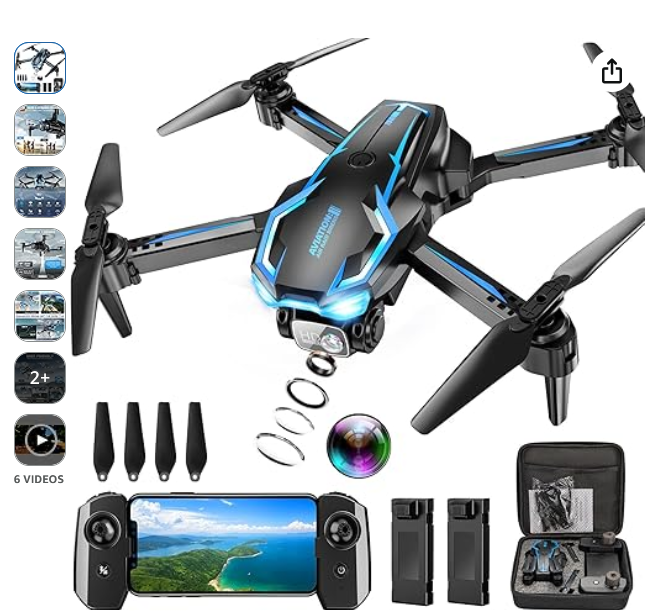
Ultimate Guide to Choosing Your Perfect 2K FPV Drone
Finding the right 2K FPV drone can feel overwhelming with dozens of options flooding the market. This comprehensive guide helps drone enthusiasts, first-time buyers, and tech lovers cut through the noise to find their ideal aircraft.
Who This Guide Is For:
This buying guide serves beginners eager to enter the FPV world, experienced pilots upgrading to 2K camera quality, and gift-buyers seeking the perfect drone for teens and adults.
You’ll discover how 2K FPV drone technology works and why it beats standard HD cameras. We’ll break down the must-have features like altitude hold, headless mode, and speed controls that separate great drones from mediocre ones. Finally, you’ll learn to match your budget with the right drone category, from affordable beginner models to professional-grade racing machines.
By the end, you’ll know exactly which 2K camera drone fits your flying style, skill level, and wallet.
Understanding 2K FPV Drone Technology and Benefits
What Makes 2K Resolution Superior for FPV Flying
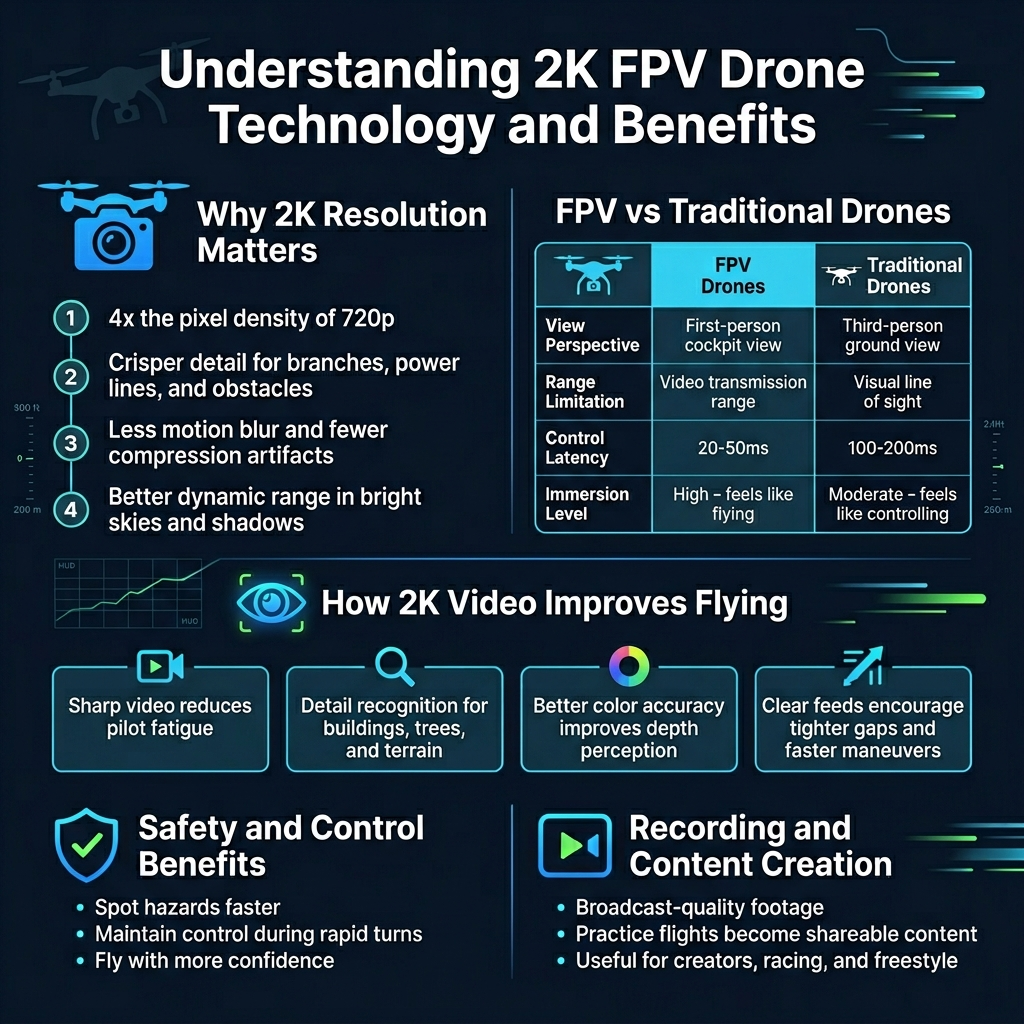
2K resolution delivers four times the pixel density of standard 720p footage, transforming how pilots experience first-person view flying. When you’re racing through tight gaps or navigating complex obstacles, every detail matters. The extra clarity helps you spot branches, power lines, and other hazards that might appear as blurry smudges on lower-resolution feeds.
The 2K FPV drone advantage becomes obvious during high-speed maneuvers. Traditional FPV systems often struggle with motion blur and compression artifacts that can disorient pilots mid-flight. With 2K resolution, the image remains crisp even during aggressive turns and rapid altitude changes. This enhanced visual fidelity directly translates to better flight control and fewer crashes.
Recording capabilities set 2K apart from its predecessors. While you’re focused on flying, your drone captures stunning footage that’s broadcast-quality. Content creators particularly benefit from this dual functionality – enjoying an immersive flight experience while simultaneously recording professional-grade video for later editing and sharing.
The improved dynamic range in 2K camera drone systems helps balance exposure between bright skies and shadowed areas. This prevents the washout effect common in lower-resolution systems, maintaining visual detail across varying lighting conditions that pilots encounter during outdoor flights.
Key Advantages of FPV Systems Over Traditional Drones
FPV technology fundamentally changes the relationship between pilot and aircraft. Instead of watching your drone from the ground like a remote observer, you see exactly what the drone sees in real-time. This perspective shift creates an incredibly immersive flying experience that feels more like piloting an aircraft than controlling a toy.
Traditional drones rely on line-of-sight operation, limiting your flying range to what you can visually track. Best FPV drone 2K models extend this range significantly through their video transmission systems. Pilots can navigate behind obstacles, through forests, and around buildings while maintaining full visual control of their aircraft.
Response time represents another critical advantage. FPV systems typically offer much lower latency between control input and visual feedback. When racing or performing precision maneuvers, this instant response can mean the difference between threading a narrow gap and clipping an obstacle. Traditional drones often introduce delays that make fast-paced flying challenging.
| Feature | FPV Drones | Traditional Drones |
|---|---|---|
| View Perspective | First-person cockpit view | Third-person ground view |
| Range Limitation | Video transmission range | Visual line of sight |
| Control Latency | 20-50ms | 100-200ms |
| Immersion Level | High – feels like flying | Moderate – feels like controlling |
The learning curve differs dramatically between systems. While traditional drones often feature automated flight modes and GPS assistance, FPV flying develops genuine piloting skills. This hands-on approach creates more confident and capable pilots who understand aircraft dynamics rather than relying solely on electronic assistance.
How 2K Video Quality Enhances Your Flying Experience
Sharp video feeds reduce pilot fatigue during extended flying sessions. When your eyes don’t strain to interpret fuzzy or pixelated images, you can fly longer with better concentration. The FPV drone buying guide experts consistently emphasize this comfort factor as crucial for both recreational and competitive pilots.
Detail recognition becomes effortless with 2K clarity. Texture patterns on buildings, individual leaves on trees, and surface variations on terrain all become clearly visible navigation references. This environmental awareness helps pilots build mental maps of their flying areas and navigate more confidently through familiar locations.
Color accuracy in 2K systems provides better depth perception cues. The subtle color gradients that help your brain judge distances work more effectively when the image quality supports fine color distinction. This natural depth perception supplement reduces the disorientation that some pilots experience when transitioning from ground-based to FPV flying.
Recording quality justifies the investment in professional FPV drone equipment. Your practice sessions, racing runs, and freestyle flights automatically become shareable content. Many pilots discover that their hobby footage attracts online audiences, sometimes leading to sponsorship opportunities or content creation careers.
The confidence boost from crystal-clear visuals encourages more adventurous flying. Pilots report feeling comfortable attempting tighter gaps, faster speeds, and more complex maneuvers when they trust their video feed completely. This confidence naturally leads to skill development and more enjoyable flying experiences across all skill levels.
Essential Features to Evaluate Before Purchase
Camera Quality and Stabilization Systems
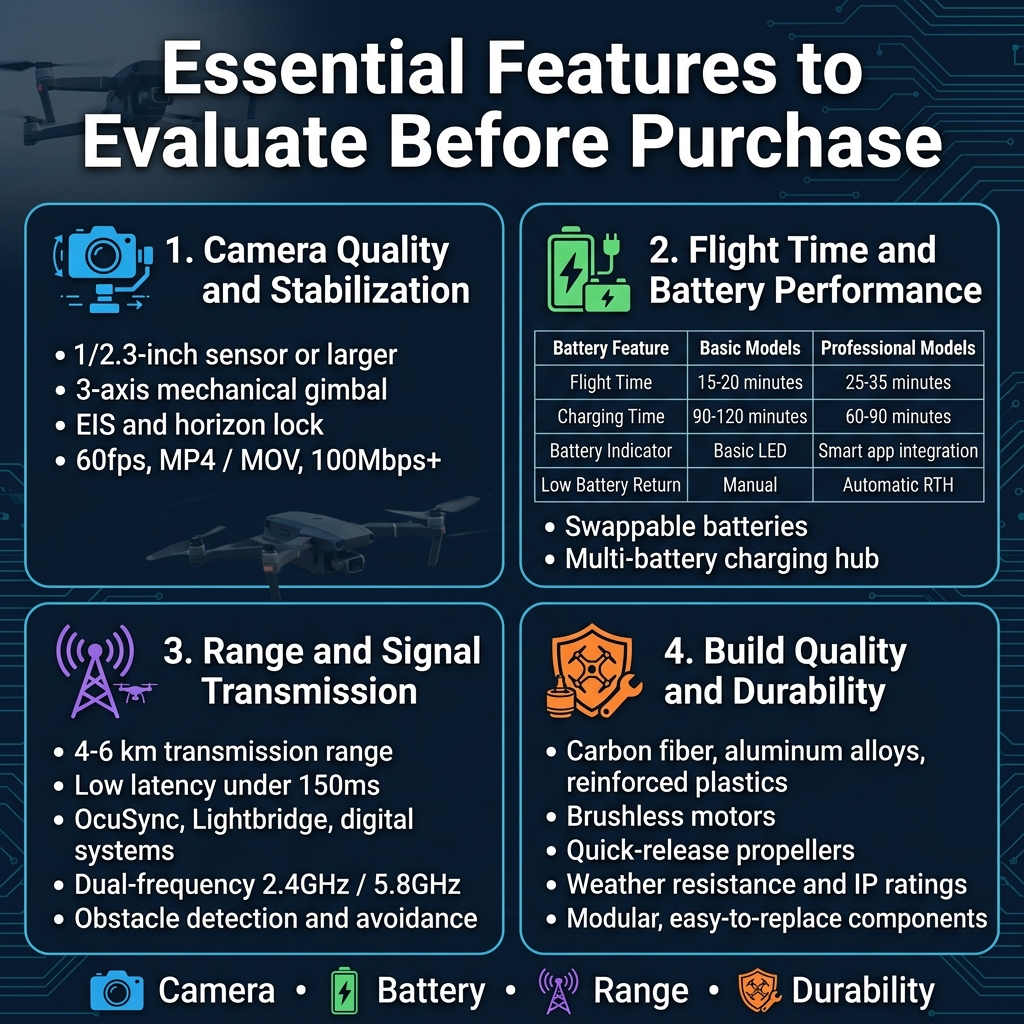
The heart of any 2K FPV drone lies in its camera system. When shopping for your perfect FPV drone, the camera sensor size makes a huge difference in image quality. Look for drones equipped with 1/2.3-inch sensors or larger, as these capture significantly more detail and handle low-light conditions better than smaller sensors.
Stabilization technology separates professional-grade drones from basic models. Best FPV drone 2K options typically feature 3-axis mechanical gimbals that counteract wind, vibration, and sudden movements. Electronic Image Stabilization (EIS) works alongside mechanical stabilization to deliver buttery-smooth footage. Some advanced models now include horizon lock features that keep your shots level even during aggressive maneuvers.
Pay attention to recording formats and bitrates. Higher-end 2K camera drones support various frame rates including 60fps for slow-motion effects and offer multiple recording formats like MP4 and MOV. The bitrate determines how much data the camera captures per second – look for models offering at least 100Mbps for crisp, detailed footage.
Flight Time and Battery Performance
Battery performance directly impacts your flying experience and creative possibilities. Most quality 2K FPV drones offer flight times between 20-35 minutes per battery charge. However, real-world performance varies based on flying style, weather conditions, and camera usage.
Smart battery technology has revolutionized drone flying. Modern batteries include built-in power management systems that monitor cell health, temperature, and charging cycles. Look for drones with swappable batteries – this feature lets you extend flying sessions by carrying multiple charged batteries.
| Battery Feature | Basic Models | Professional Models |
|---|---|---|
| Flight Time | 15-20 minutes | 25-35 minutes |
| Charging Time | 90-120 minutes | 60-90 minutes |
| Battery Indicator | Basic LED | Smart app integration |
| Low Battery Return | Manual | Automatic RTH |
Consider the charging ecosystem too. Some manufacturers offer multi-battery charging hubs that can charge several batteries simultaneously, perfect for extended shooting sessions.
Range and Signal Transmission Capabilities
Signal transmission technology determines how far you can fly while maintaining reliable control and video feed. FPV drone buying guide experts recommend looking for drones with transmission ranges of at least 4-6 kilometers, though actual performance depends on environmental factors.
Modern transmission systems use advanced protocols like OcuSync, Lightbridge, or proprietary digital systems that provide low-latency video feeds. Latency under 150ms is crucial for responsive flying, especially when navigating obstacles or performing precision maneuvers.
Dual-frequency transmission (2.4GHz and 5.8GHz) helps avoid interference in crowded signal environments. Some professional FPV drones automatically switch between frequencies to maintain the strongest possible connection. Obstacle detection and avoidance systems work hand-in-hand with transmission capabilities to prevent crashes when flying at extended ranges.
Build Quality and Durability Standards
Construction quality determines how well your investment withstands regular use and occasional mishaps. Affordable FPV drone options often compromise on build materials, while premium models use carbon fiber, aluminum alloys, and reinforced plastics.
Propeller design and motor quality significantly impact durability. Look for brushless motors that offer longer lifespan and better efficiency compared to brushed alternatives. Quick-release propellers make field repairs easier, while foldable designs improve portability without sacrificing structural integrity.
Weather resistance varies dramatically between models. Some drones handle light rain and wind gusts up to 35mph, while others require perfect conditions. Check IP ratings if you plan to fly in challenging environments. Quality beginner FPV drone models often include protective cases and spare parts to help new pilots learn without expensive repair bills.
Modular design elements allow for easy component replacement and upgrades. Drones with removable gimbals, swappable landing gear, and accessible internal components provide better long-term value and easier maintenance.
Top 2K FPV Drone Categories for Different Users
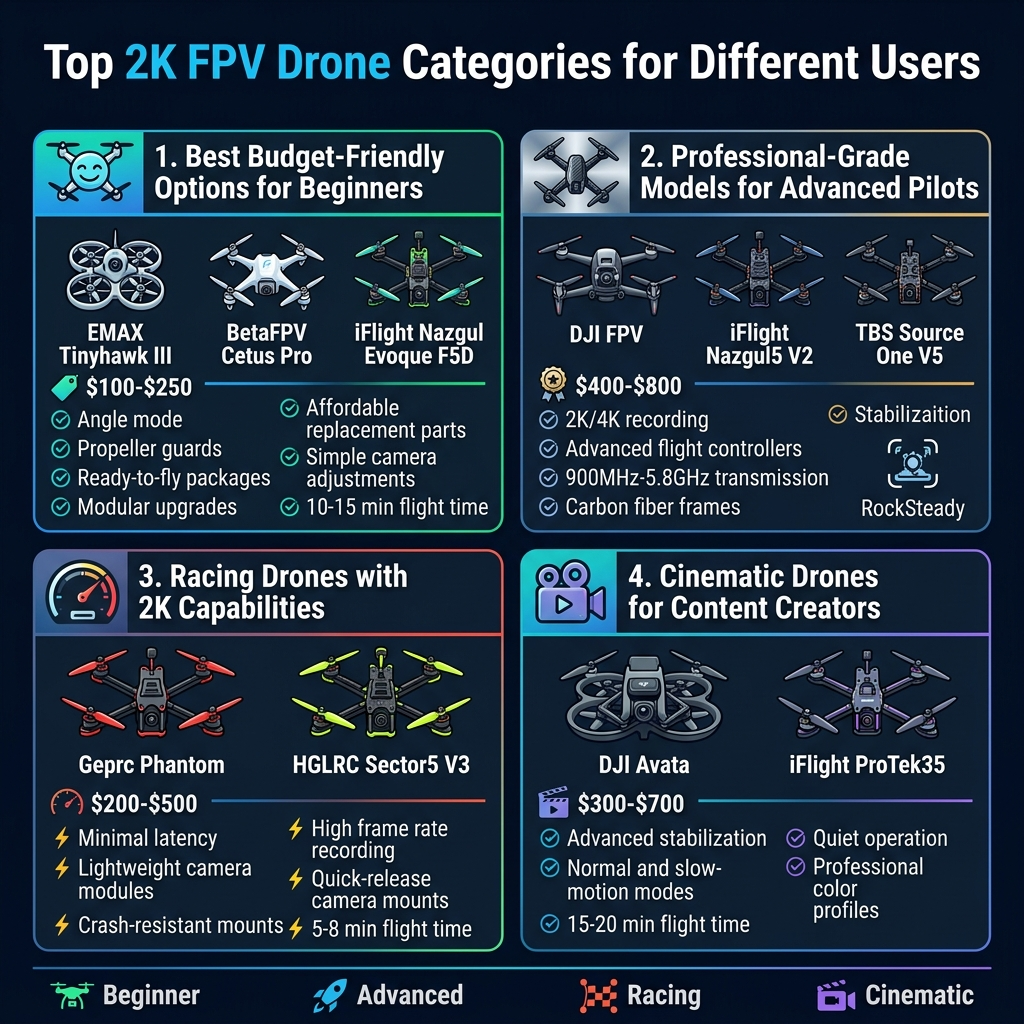
Best Budget-Friendly Options for Beginners
Starting your FPV journey doesn’t mean breaking the bank. Budget-friendly 2K FPV drones offer excellent learning platforms while delivering decent video quality. The EMAX Tinyhawk III stands out as a top choice, featuring a 2K camera and durable build perfect for crashes during the learning phase. At around $150, it includes everything needed to start flying.
The BetaFPV Cetus Pro provides another excellent entry point with its 2K recording capability and beginner-friendly flight modes. Its modular design allows easy repairs, keeping maintenance costs low. For those wanting slightly better performance, the iFlight Nazgul Evoque F5D offers impressive 2K footage quality while remaining accessible for newcomers.
Key features to look for in beginner 2K FPV drones:
- Angle mode for stable learning flights
- Durable propeller guards
- Ready-to-fly packages with controllers
- Affordable replacement parts
- Simple camera adjustments
Most affordable FPV drones in this category range from $100-$250, making them perfect for testing your interest before investing in premium equipment. These models typically offer 10-15 minutes of flight time and decent transmission range for backyard practice sessions.
Professional-Grade Models for Advanced Pilots
Advanced pilots demand precision, reliability, and superior video quality from their professional FPV drones. The DJI FPV leads this category with its exceptional 2K/4K recording capabilities, advanced flight modes, and professional-grade transmission system. Its RockSteady stabilization ensures smooth footage even during aggressive maneuvers.
The iFlight Nazgul5 V2 represents the pinnacle of custom-built racing machines with 2K recording abilities. Built with carbon fiber construction and high-performance motors, it delivers incredible speed while maintaining video quality. Professional pilots often choose this model for its customization potential and robust build quality.
Professional-grade specifications include:
- High-quality 2K cameras with manual controls
- Advanced flight controllers with custom firmware
- Premium transmission systems (900MHz-5.8GHz)
- Carbon fiber frames for durability
- Modular designs for easy upgrades
The TBS Source One V5 offers complete customization freedom, allowing pilots to build their perfect machine. These best FPV drone 2K models typically cost $400-$800, reflecting their premium components and capabilities.
Racing Drones with 2K Capabilities
FPV racing drones traditionally prioritized speed over video quality, but modern 2K-capable racing machines change this dynamic. The Geprc Phantom combines lightning-fast acceleration with surprisingly good 2K recording, making it perfect for capturing racing footage.
Racing-specific features include ultra-lightweight 2K cameras that don’t compromise aerodynamics. The HGLRC Sector5 V3 weighs just 280 grams while maintaining excellent 2K video quality during high-speed runs. These machines typically sacrifice some camera stabilization for reduced weight and improved agility.
Racing drone 2K camera considerations:
- Minimal latency for real-time piloting
- Lightweight camera modules
- Crash-resistant mounting systems
- High frame rate recording options
- Quick-release camera mounts
Most 2K camera drones designed for racing cost $200-$500, balancing performance with recording capability. Flight times remain shorter (5-8 minutes) due to aggressive flying styles and high-performance components.
Cinematic Drones for Content Creators
Content creators need 2K FPV drones that prioritize video quality and smooth footage over pure speed. The DJI Avata excels here with its cinewhoop design, offering exceptional stabilization and cinematic recording modes. Its compact size allows indoor filming while maintaining professional video quality.
The iFlight ProTek35 represents the cinewhoop category perfectly, combining protective propeller guards with high-quality 2K recording. These drone with 2K camera models focus on smooth, professional-looking footage suitable for social media and commercial projects.
Cinematic drone features:
- Advanced gimbal stabilization
- Multiple recording modes (normal, slow-motion)
- Longer flight times (15-20 minutes)
- Quiet operation for audio recording
- Professional color profiles
2K drone review data shows these models typically range from $300-$700, depending on camera quality and stabilization features. The investment pays off through professional-quality footage that commands higher rates for commercial work.
Critical Specifications That Impact Performance
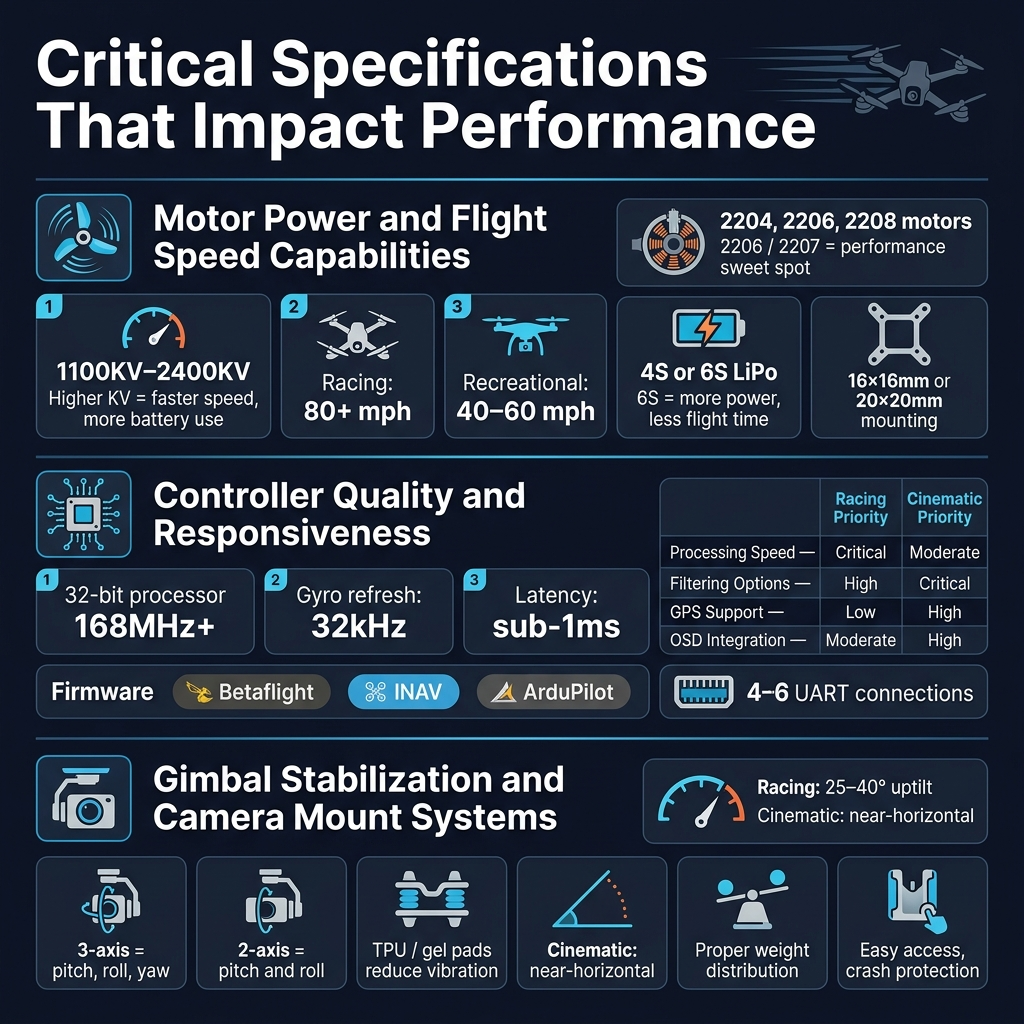
Motor Power and Flight Speed Capabilities
The heart of any 2K FPV drone lies in its motor configuration, which directly determines how your aircraft performs in the air. Most quality drones feature brushless motors ranging from 1100KV to 2400KV, with higher KV ratings delivering faster speeds but consuming more battery. For racing applications, look for motors that can push your drone beyond 80 mph, while recreational flying typically needs motors capable of 40-60 mph sustained flight.
Motor size matters just as much as power ratings. Standard configurations include 2204, 2206, and 2208 motors, where the first two digits represent stator diameter and the last two indicate height. Larger motors generally provide more torque and efficiency but add weight. The sweet spot for best FPV drone 2K performance usually falls around 2206 or 2207 motors paired with appropriate propellers.
Battery compatibility plays a crucial role in motor performance. Most modern setups run on 4S or 6S LiPo batteries, with 6S configurations offering significantly more power at the cost of reduced flight time. Your motor choice should align with your intended battery setup to avoid underpowering or overwhelming your system.
Consider the motor mounting pattern as well – most quality frames use 16x16mm or 20x20mm mounting holes, and your motor selection should match your frame specifications for proper installation.
Controller Quality and Responsiveness
The flight controller serves as the brain of your 2K camera drone, processing thousands of calculations per second to maintain stable flight. Modern controllers feature 32-bit processors running at speeds exceeding 168MHz, with gyroscope refresh rates reaching 32kHz for ultra-responsive flight characteristics.
Popular flight controller firmware includes Betaflight, INAV, and ArduPilot, each offering different strengths. Betaflight dominates the racing scene with aggressive tune options, while INAV excels at autonomous features like GPS return-to-home. The controller should support your preferred firmware and offer adequate processing power for smooth operation.
Input lag directly impacts your flying experience, especially during high-speed maneuvers. Quality controllers maintain sub-1ms latency between stick input and motor response. Look for controllers with dedicated filtering capabilities to reduce noise and jitter that can cause unpredictable flight behavior.
| Controller Feature | Racing Priority | Cinematic Priority |
|---|---|---|
| Processing Speed | Critical | Moderate |
| Filtering Options | High | Critical |
| GPS Support | Low | High |
| OSD Integration | Moderate | High |
The controller should also offer sufficient UART ports for connecting additional peripherals like GPS modules, telemetry systems, or external receivers. Most modern controllers provide 4-6 UART connections, allowing flexible configuration options.
Gimbal Stabilization and Camera Mount Systems
Camera stabilization separates amateur footage from professional results, making this component essential for any serious FPV drone buying guide consideration. Three-axis gimbals provide the smoothest footage by compensating for pitch, roll, and yaw movements, while two-axis systems handle pitch and roll but leave yaw correction to post-processing.
Mechanical gimbals offer superior stabilization compared to electronic image stabilization (EIS) alone, though they add weight and complexity to your setup. The gimbal should accommodate your chosen camera size – most 2K systems work perfectly with GoPro Hero-sized action cameras or dedicated drone cameras.
Vibration isolation becomes critical when mounting cameras directly to the frame without a gimbal. Soft-mount systems using rubber dampeners or gel pads can significantly reduce high-frequency vibrations that create jello effects in footage. TPU (flexible plastic) mounts offer excellent vibration damping while maintaining structural integrity.
Consider the mounting angle adjustability as well. Fixed mounts work fine for specific applications, but adjustable systems let you optimize camera angle for different flying styles. Racing setups typically use 25-40 degree uptilt angles, while cinematic flying benefits from near-horizontal positioning.
Weight distribution affects flight characteristics dramatically. Heavy camera systems require careful balancing to maintain proper center of gravity. Some pilots prefer lightweight naked GoPros or dedicated FPV cameras to minimize impact on flight performance while still achieving quality 2K recording capabilities.
The camera mount should also provide adequate protection during crashes while allowing easy access for memory card changes and settings adjustments. Quick-release mechanisms save time during battery changes and reduce wear on mounting screws.
Budget Planning and Value Considerations
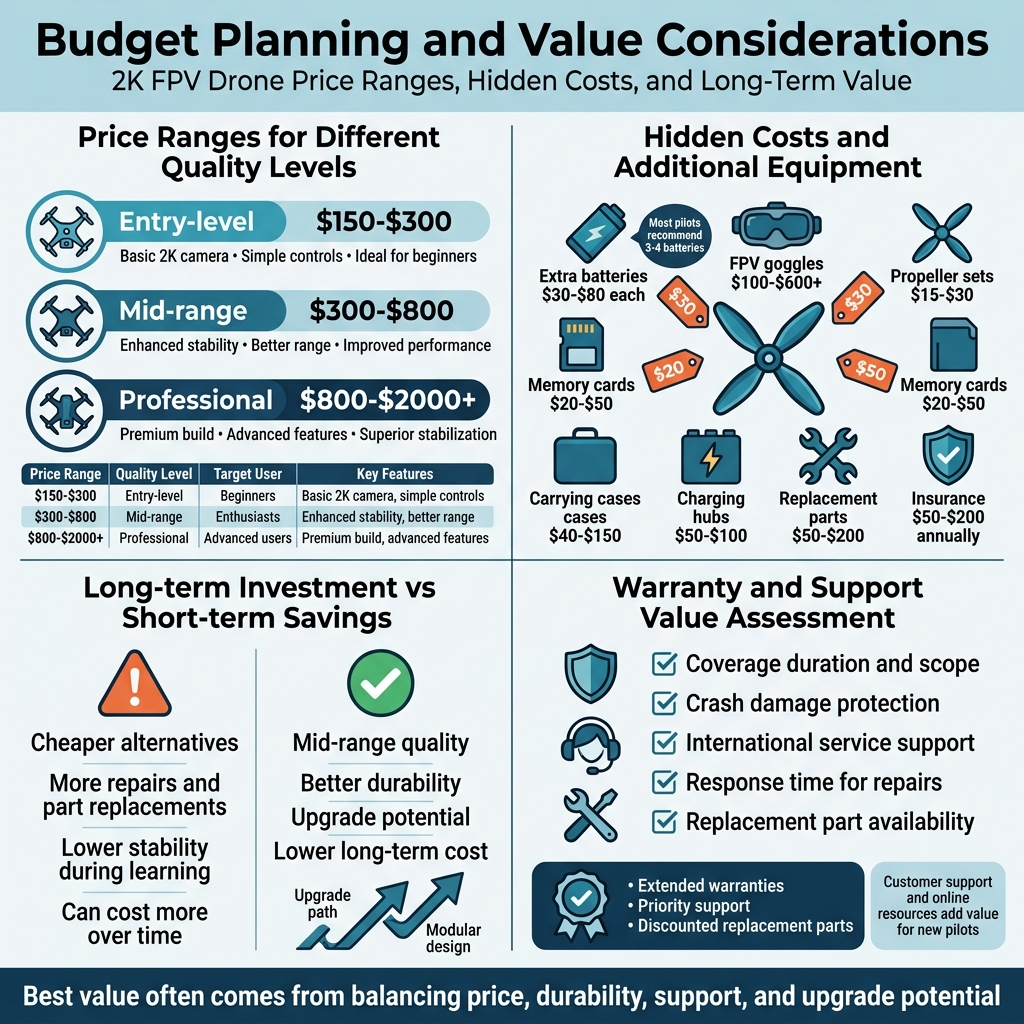
Price Ranges for Different Quality Levels
Entry-level 2K FPV drones typically start around $150-$300, offering decent camera quality and basic flight features perfect for beginners exploring the hobby. These affordable FPV drones usually include essential components like a 2K camera, basic gimbal stabilization, and standard flight modes, making them ideal for learning fundamental piloting skills without breaking the bank.
Mid-range options fall between $300-$800, delivering enhanced build quality, improved flight performance, and more sophisticated camera systems. These best FPV drone 2K models often feature better transmission systems, longer flight times, and advanced flight modes that appeal to enthusiasts ready to step up their aerial photography game.
Professional-grade 2K camera drones command prices from $800-$2000+, incorporating premium materials, advanced flight controllers, and superior camera stabilization systems. These high-end models cater to serious hobbyists and semi-professional users who demand reliability and exceptional performance for their aerial projects.
| Price Range | Quality Level | Target User | Key Features |
|---|---|---|---|
| $150-$300 | Entry-level | Beginners | Basic 2K camera, simple controls |
| $300-$800 | Mid-range | Enthusiasts | Enhanced stability, better range |
| $800-$2000+ | Professional | Advanced users | Premium build, advanced features |
Hidden Costs and Additional Equipment Needs
Beyond the initial drone purchase, several additional expenses can significantly impact your total investment. Extra batteries are practically mandatory since most beginner FPV drones offer 15-25 minutes of flight time per battery. Quality replacement batteries typically cost $30-$80 each, and most pilots recommend having at least 3-4 batteries for extended flying sessions.
FPV goggles represent another substantial expense, ranging from $100 for basic models to $600+ for high-resolution displays with advanced features. While some drones include basic goggles, upgrading to better equipment dramatically improves the flying experience.
Essential accessories include:
- Propeller sets ($15-$30)
- Memory cards ($20-$50)
- Carrying cases ($40-$150)
- Charging hubs ($50-$100)
- Replacement parts ($50-$200)
Insurance costs vary by location and coverage level but typically range from $50-$200 annually for recreational use. Professional operators may face higher premiums depending on their intended use and coverage requirements.
Long-term Investment vs Short-term Savings
Choosing cheaper alternatives might seem appealing initially, but quality FPV racing drones and camera models often provide better long-term value through durability and upgrade potential. Budget models frequently require more frequent repairs and part replacements, potentially costing more over time than investing in a mid-range option from the start.
Higher-quality drones typically feature modular designs allowing component upgrades rather than complete replacements. This modularity extends the drone’s useful life and provides a clear upgrade path as skills and requirements evolve.
Consider the learning curve when evaluating long-term costs. Cheaper drones often have less stable flight characteristics and fewer safety features, leading to more crashes and repairs during the learning phase. Investing in a professional FPV drone with good stability and safety features can actually reduce learning costs while providing a better foundation for skill development.
Warranty and Support Value Assessment
Comprehensive warranty coverage varies significantly between manufacturers and price points. Premium brands typically offer 12-24 month warranties covering manufacturing defects and may include crash damage protection for an additional fee.
Key warranty considerations include:
- Coverage duration and scope
- Crash damage protection availability
- International service support
- Response time for repairs
- Replacement part availability
Customer support quality directly impacts the ownership experience, especially for newcomers to FPV flying. Companies offering extensive online resources, active community forums, and responsive technical support provide added value that justifies premium pricing for many users.
Some manufacturers offer comprehensive care packages including extended warranties, priority support, and discounted replacement parts, which can provide excellent value for active pilots who fly frequently in challenging conditions.
Safety Features and Legal Compliance
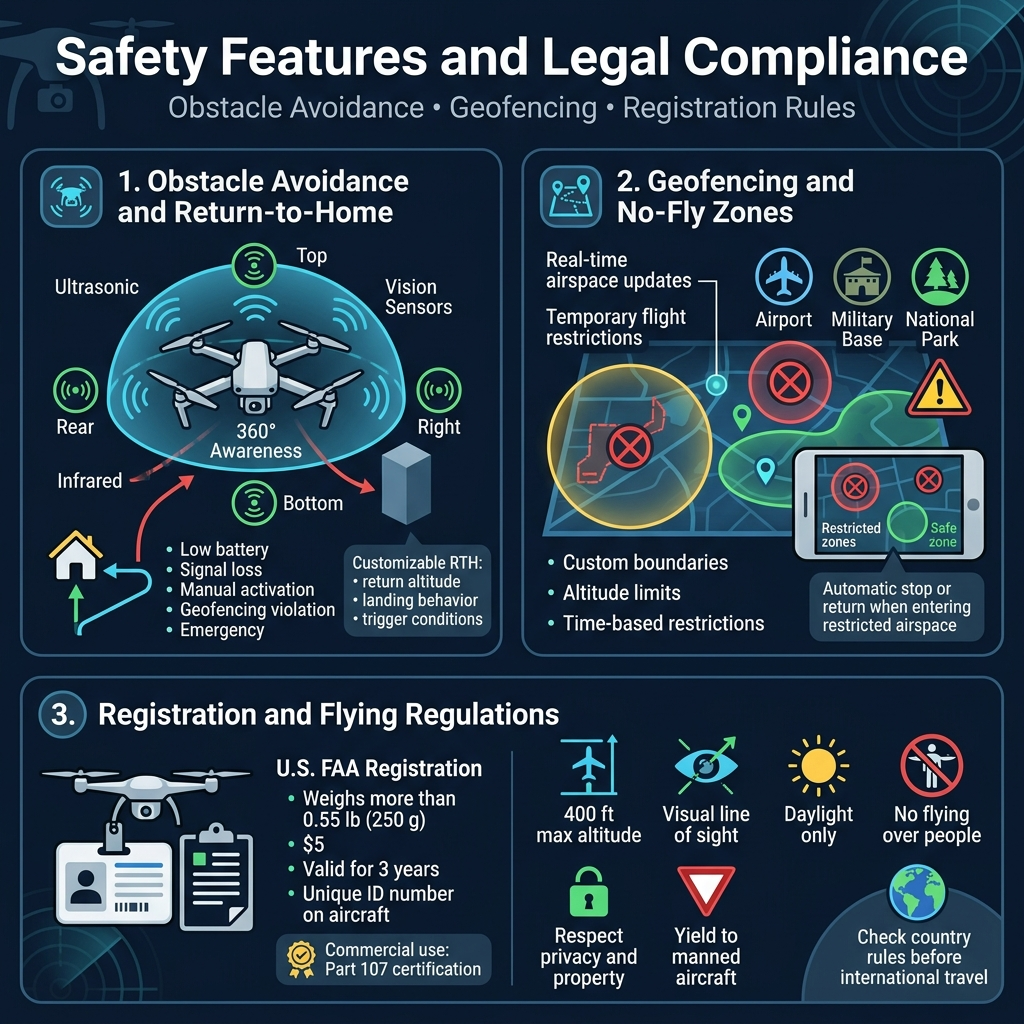
Obstacle Avoidance and Return-to-Home Functions
Modern 2K FPV drones come equipped with sophisticated safety systems designed to prevent crashes and protect your investment. Obstacle avoidance technology uses multiple sensors including ultrasonic, infrared, and vision-based systems to detect barriers in the drone’s flight path. These sensors create a 360-degree awareness bubble around your aircraft, automatically adjusting flight patterns or triggering emergency stops when obstacles are detected.
The most advanced 2K camera drones feature multi-directional obstacle sensing, covering front, rear, sides, top, and bottom approaches. This comprehensive coverage proves especially valuable during fast-paced FPV flights where split-second reactions matter. Some systems even learn from repeated flights in the same area, building obstacle maps for improved future performance.
Return-to-Home (RTH) functionality serves as your safety net when things go wrong. This feature automatically guides your FPV drone 2K back to its takeoff point under various circumstances:
- Low battery warnings
- Loss of signal between controller and aircraft
- Manual activation by pilot
- Geofencing boundary violations
- Emergency situations
Professional FPV drones typically offer customizable RTH settings, allowing you to adjust return altitude, landing behavior, and trigger conditions. Smart RTH systems can even navigate around obstacles during the return journey, ensuring safe passage home.
Geofencing and No-Fly Zone Awareness
Geofencing technology creates virtual boundaries that prevent your drone from entering restricted airspace. This built-in safety feature connects to GPS databases containing real-time information about airports, military installations, national parks, and other prohibited zones. When your best FPV drone 2K approaches these areas, the system automatically stops forward movement or initiates an immediate return sequence.
Beginner FPV drone models often include simplified geofencing with basic airport restrictions, while more sophisticated units offer comprehensive databases updated regularly through internet connections. These systems typically provide:
- Real-time airspace updates
- Temporary flight restriction alerts
- Custom boundary creation for personal use
- Altitude limitations based on location
- Time-based restrictions for special events
Many manufacturers partner with aviation authorities to ensure their geofencing databases remain current and accurate. Some systems even display nearby airports and restricted zones directly on your controller screen, providing visual confirmation of safe flying areas.
Registration Requirements and Flying Regulations
Understanding drone registration requirements protects you from potential legal issues and fines. In the United States, the FAA requires registration for any 2K FPV drone weighing more than 0.55 pounds (250 grams). Registration costs $5 and remains valid for three years, covering all drones in your fleet under recreational use.
The registration process involves providing personal information and receiving a unique identification number that must be displayed on your aircraft. This number should be placed inside the battery compartment or another easily accessible location where it won’t interfere with normal operation.
Commercial drone operations require additional certification through the FAA’s Part 107 program, which involves passing a knowledge test covering airspace, weather, aircraft performance, and operational procedures. Even affordable FPV drone operators planning any commercial use must obtain this certification.
Key flying regulations that apply to most 2K drone review models include:
- Maximum altitude of 400 feet above ground level
- Maintaining visual line of sight with aircraft
- Flying only during daylight hours (unless specifically certified for night operations)
- Avoiding flights over people or moving vehicles
- Respecting privacy and property rights
- Yielding right-of-way to manned aircraft
International travelers should research destination country requirements before packing their FPV racing drone gear. Many countries have different registration processes, flight restrictions, and import requirements that could affect your travel plans.
Trending option to purchase
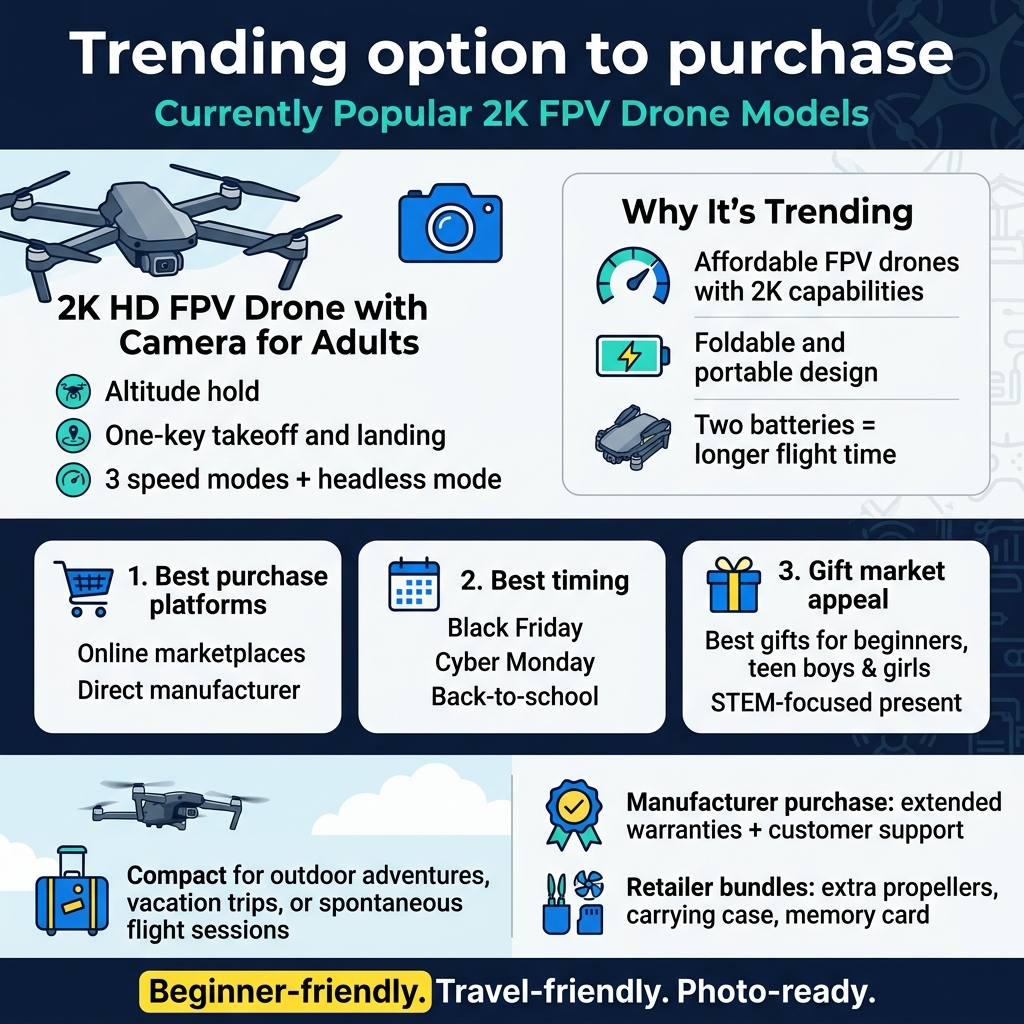
Currently Popular 2K FPV Drone Models
The 2K HD FPV drone with camera for adults has emerged as one of the most sought-after models in today’s market. This particular drone strikes an excellent balance between advanced features and user-friendly operation, making it perfect for both beginners and experienced pilots looking for reliable performance without breaking the bank.
What makes this model stand out is its comprehensive feature set that includes altitude hold technology, which automatically maintains stable flight height – a game-changer for capturing smooth aerial footage. The one-key takeoff and landing function eliminates the learning curve typically associated with drone operation, allowing new pilots to focus on enjoying their flight experience rather than struggling with complex controls.
The inclusion of three speed modes caters to different skill levels and flight scenarios. Beginners can start with the slowest setting to build confidence, while more experienced users can switch to higher speeds for dynamic footage or racing scenarios. The headless mode feature removes directional confusion by making the drone respond to pilot commands regardless of which way it’s facing.
Market Trends Driving Popularity
Recent market analysis shows that affordable FPV drones with 2K capabilities are experiencing unprecedented demand. Consumers are moving away from basic toy drones toward models that offer genuine aerial photography capabilities without requiring professional-level investment.
The trend toward foldable and portable designs reflects modern users’ needs for convenience and travel-friendly equipment. This particular model’s compact design makes it easy to pack for outdoor adventures, vacation trips, or spontaneous flight sessions.
Battery life has become a crucial selling point, which is why models including two batteries are gaining significant traction. This feature effectively doubles flight time and reduces downtime between charging sessions, addressing one of the most common complaints among drone enthusiasts.
Best Purchase Platforms and Timing
Online marketplaces currently offer the most competitive pricing for 2K camera drones, with seasonal sales providing additional savings opportunities. Black Friday, Cyber Monday, and back-to-school periods typically feature the deepest discounts on consumer electronics, including FPV drones.
Direct manufacturer purchases often include extended warranties and customer support benefits that third-party sellers might not provide. However, established retailers frequently bundle accessories like extra propellers, carrying cases, or memory cards that add significant value to the purchase.
Gift Market Appeal
The positioning of these drones as “best gifts for beginners, teen boys & girls” taps into the growing trend of STEM-focused presents. Parents and gift-givers increasingly seek products that combine entertainment with educational value, making beginner FPV drones with 2K cameras an attractive option.
The age-appropriate design and safety features make these models suitable for supervised use by younger pilots, while the advanced camera capabilities ensure the device won’t be quickly outgrown as skills develop.
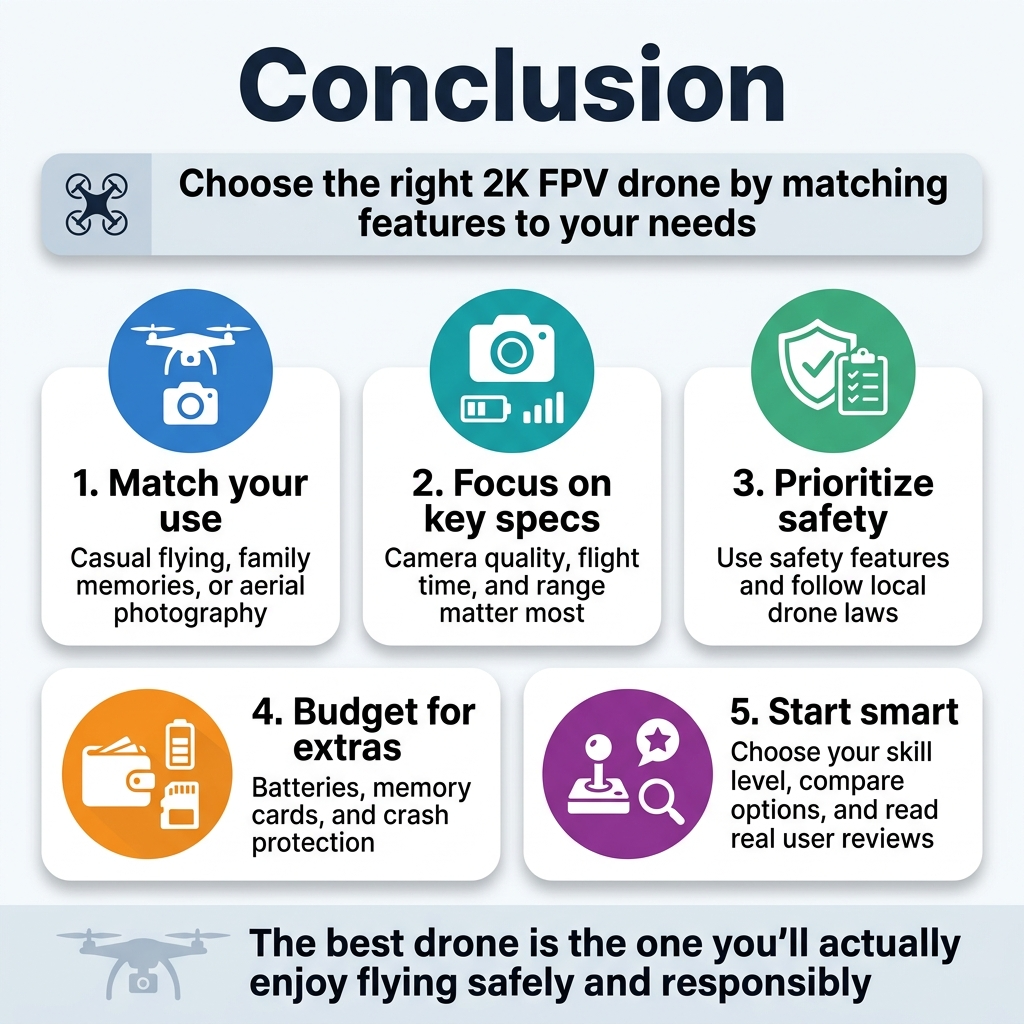
Getting the right 2K FPV drone really comes down to knowing what you need and doing your homework first. Think about how you’ll use it most – whether that’s casual flying around the neighborhood, capturing family memories, or getting serious about aerial photography. The key specs like camera quality, flight time, and range matter way more than flashy marketing claims, and don’t forget that safety features and following local drone laws aren’t just nice-to-haves.
Your budget should cover more than just the drone itself – factor in extra batteries, memory cards, and maybe some crash protection because let’s face it, we all crash at some point. Start with something that matches your current skill level rather than jumping into the deep end with a complex racing drone. Take your time comparing options, read real user reviews, and remember that the best drone for you is the one you’ll actually enjoy flying safely and responsibly.