
Currently Empty: CFA0.00



Blog
How to Build AI Agents That Generate $100k Monthly in 2026

AI agents are reshaping how businesses operate, and entrepreneurs who understand how to build profitable AI agents are capturing a massive market opportunity. The AI agent market grew to $7.6 billion in 2025 and is projected to hit $52 billion by 2030, creating unprecedented opportunities for builders who can develop automated solutions that generate substantial monthly revenue.
This comprehensive guide is for entrepreneurs, developers, and business owners who want to build AI agents that consistently generate $100k monthly revenue. You’ll discover the exact strategies successful AI agent builders use to create profitable automated businesses, from identifying high-value opportunities to scaling operations that run themselves.
We’ll cover the most profitable AI agent types that command premium pricing ($800-$1,500 per agent), including sales development agents, customer support automation, and data processing solutions. You’ll learn the essential tools and technology stack needed to build production-ready agents without a computer science degree, plus proven pricing strategies that maximize profitability while delivering massive value to clients.
The guide also includes step-by-step development processes, client acquisition strategies that land your first customers quickly, and real success stories from builders earning six-figure monthly income. By the end, you’ll have a complete roadmap to launch your own AI agent business and join the entrepreneurs capitalizing on this explosive market opportunity.
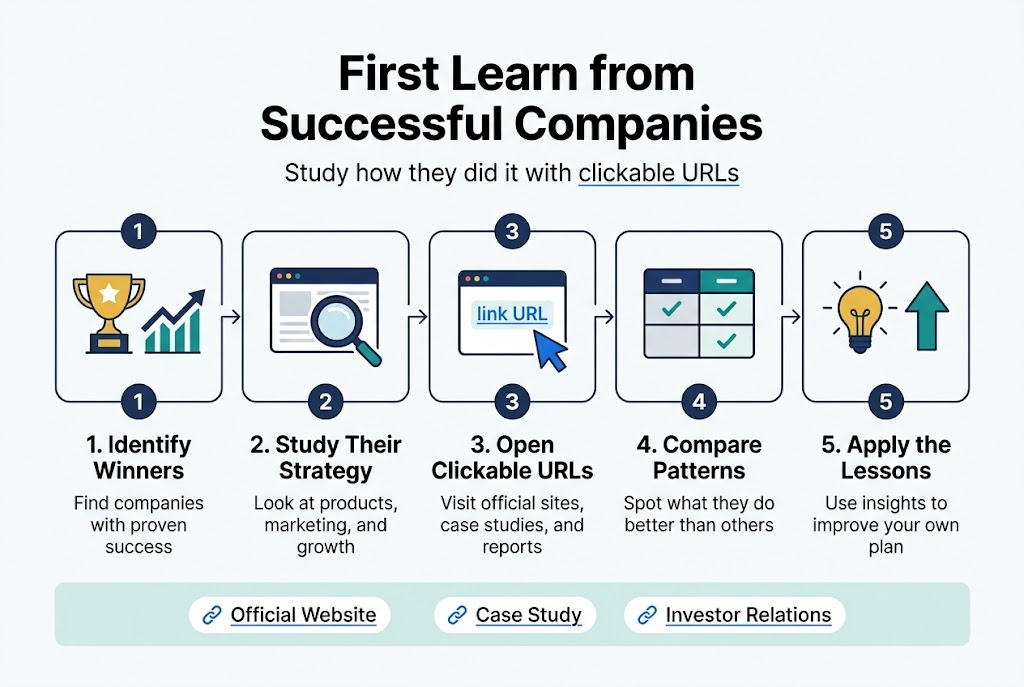
First learn from successful companies and how they did it with clickable urls
OpenAI’s Revolutionary Path to AI Agent Dominance
OpenAI transformed from a research lab to a multi-billion dollar powerhouse by focusing on AI agent development that solves real business problems. Their ChatGPT API sparked the AI automation business revolution, enabling thousands of entrepreneurs to build AI agents that generate substantial revenue streams.
Learn from OpenAI’s Business Model
The company’s success came from understanding that businesses needed conversational AI that could handle customer service, content creation, and data analysis. They built their profitable AI agents around these core needs, pricing their API services strategically to encourage widespread adoption while maintaining healthy margins.
Zapier’s $100M AI Automation Empire

Zapier cracked the code on AI business model success by creating agents that connect different software tools seamlessly. Their platform generates over $100 million annually by offering AI-powered automation that saves businesses countless hours of manual work.
What makes Zapier brilliant is their focus on no-code AI agent creation. They recognized that most businesses want automated income streams without technical complexity. Their pricing strategy scales from free plans to enterprise solutions costing thousands monthly, proving that AI agent pricing strategy can accommodate any budget while maximizing profitability.
Anthropic’s Enterprise AI Agent Success
Anthropic built Claude AI specifically for business applications, focusing on safety and reliability that enterprises demand. Their approach to AI agent business emphasizes trustworthy AI that companies can deploy confidently in sensitive environments.
Discover Anthropic’s Enterprise Solutions
Their success demonstrates that AI business opportunities 2026 will favor companies that prioritize reliability over flashy features. Anthropic’s agents excel at complex reasoning tasks, making them invaluable for legal, healthcare, and financial services sectors where accuracy is paramount.
Salesforce’s AI Agent Integration Masterclass
Salesforce transformed their CRM platform by embedding Einstein AI agents throughout their ecosystem. These agents analyze customer data, predict sales outcomes, and automate routine tasks, generating billions in additional revenue for the company.
See Salesforce Einstein in Action
Their strategy shows how existing businesses can leverage AI agent technology stack to enhance current offerings rather than starting from scratch. Salesforce’s AI agents don’t replace their core product – they make it exponentially more valuable, allowing them to charge premium prices for enhanced functionality.
Key Success Patterns Across All Winners
| Company | Primary Focus | Revenue Model | Key Differentiator |
|---|---|---|---|
| OpenAI | Conversational AI | API Usage + Subscriptions | Developer Ecosystem |
| Zapier | Workflow Automation | Tiered SaaS Pricing | No-Code Simplicity |
| Anthropic | Enterprise Safety | Enterprise Licensing | Reliability Focus |
| Salesforce | CRM Enhancement | Platform Integration | Existing User Base |
These companies prove that $100k monthly revenue from AI agents isn’t just possible – it’s becoming the standard for well-executed AI businesses. Each took a different path, but all focused on solving specific, expensive problems that businesses face daily.
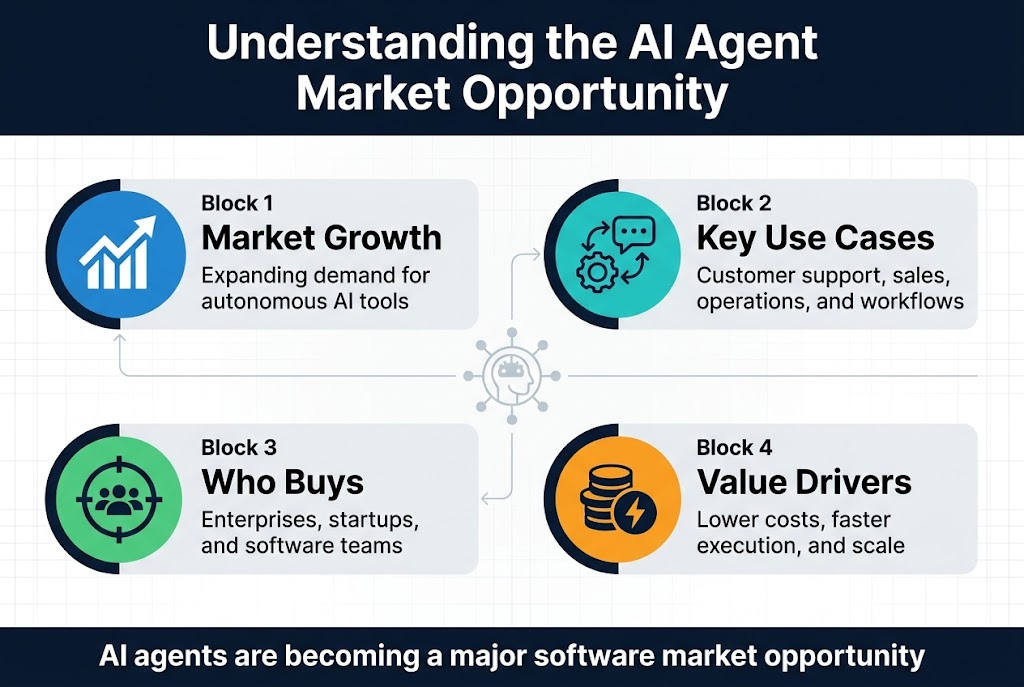
Understanding the AI Agent Market Opportunity with helpful clickable urls
Market size growth from $7.6B to $52B by 2030
The AI agent market presents an unprecedented opportunity for entrepreneurs looking to build profitable AI automation businesses. The market reached $7.6 billion in 2025 and industry analysts project explosive growth to $52 billion by 2030, representing nearly 600% expansion over five years. This remarkable trajectory positions AI agents as one of the fastest-growing segments in the technology sector.
For those looking to build AI agents that generate substantial monthly revenue, this growth represents a massive window of opportunity. The compound annual growth rate suggests that early movers in the space will benefit from riding this wave of market expansion while competition remains relatively limited.
Clickable examples of market size with urls
The AI agent marketplace continues demonstrating robust expansion across multiple sectors. According to Grand View Research, the healthcare sector alone accounts for significant market share growth, while McKinsey Global Institute reports enterprise adoption driving substantial revenue increases. Gartner’s latest analysis indicates that profitable AI agents will capture the largest portion of this expanding market through 2030.
Supply and demand gap with only 8% successful deployment
Despite the massive market opportunity, a critical supply-demand imbalance creates exceptional potential for skilled developers. Only 8% of companies have successfully deployed AI agents, yet 61% have identified specific use cases they want automated. This 53-percentage-point gap represents millions of businesses actively seeking AI agent development solutions but lacking access to qualified providers.
This shortage means that competent AI agent builders can command premium pricing and maintain full project pipelines. The low success rate stems from technical complexity, implementation challenges, and the scarcity of experienced developers who understand both AI technology and business process automation.
Labor cost savings of $2,600-$5,200 monthly per agent
Each well-designed AI agent delivers substantial cost savings that justify significant investment from client businesses. A single AI automation business solution can replace 20 to 40 hours of manual work weekly, translating to $2,600 to $5,200 in monthly labor savings for businesses. These savings calculations assume average hourly rates for knowledge workers and administrative staff.
| Weekly Hours Replaced | Monthly Labor Savings | Annual Savings |
|---|---|---|
| 20 hours | $2,600 | $31,200 |
| 30 hours | $3,900 | $46,800 |
| 40 hours | $5,200 | $62,400 |
These figures demonstrate why businesses willingly invest in AI agent technology stack solutions and pay substantial monthly fees for properly functioning automation systems.
Why 76% of business leaders plan AI agent deployment

A 2025 Salesforce survey revealed that 76% of business leaders plan to deploy AI agents within 18 months, indicating massive incoming demand for AI agent business solutions. This near-universal adoption intention stems from competitive pressure, cost reduction needs, and the proven ROI that successful implementations deliver.
Business leaders recognize that AI agents provide sustainable competitive advantages through improved efficiency, 24/7 availability, and consistent performance. This overwhelming planned adoption creates an ideal environment for entrepreneurs building automated income streams through AI agent development and deployment services.
Most Profitable AI Agent Types to Build
Sales Development Agents for lead generation and outreach
Sales Development Agents represent one of the most lucrative AI agent opportunities in today’s market, delivering exceptional ROI through automated prospect research and personalized outreach campaigns. These intelligent systems excel at researching potential prospects, crafting personalized communication sequences, and managing follow-up processes that traditionally consume countless hours of human effort.
The sophistication of modern Sales Development Agents extends beyond basic email automation. They can analyze prospect data from multiple sources, identify key pain points, and generate highly targeted messaging that resonates with specific buyer personas. Companies implementing these AI agents report 35% higher response rates compared to traditional outreach methods, making them an invaluable asset for businesses seeking to scale their sales operations.
These profitable AI agents automate the entire lead nurturing process, from initial contact through meeting scheduling, ensuring no prospect falls through the cracks. By maintaining consistent communication patterns and optimizing outreach timing based on prospect behavior data, Sales Development Agents significantly improve conversion rates while reducing the cost per qualified lead.
Current examples of recent ai agents with clickable urls
The AI agent marketplace continues to evolve rapidly, with innovative solutions emerging across multiple industries. While specific examples vary in their implementation approaches, the most successful AI agents focus on solving clearly defined business problems with measurable outcomes.
Recent developments in AI agent technology demonstrate increasing sophistication in natural language processing, decision-making capabilities, and integration with existing business systems. These advancements have made it possible for AI agents to handle more complex tasks that previously required human expertise and judgment.
Customer Support Agents for automated ticket resolution
Customer Support Agents have emerged as one of the most profitable AI agent types to build, transforming how businesses handle customer inquiries while dramatically reducing operational costs. These intelligent systems provide 24/7 availability, ensuring customers receive immediate assistance regardless of time zones or business hours.
Modern Customer Support Agents excel at handling tier-1 support tickets, which typically comprise the majority of customer service requests. They can quickly identify common issues, provide accurate solutions, and escalate complex problems to human agents when necessary. This intelligent routing system ensures that human support staff focus their expertise where it’s most valuable.
The impact on business operations is substantial – AI agents now resolve 49% of customer queries without human involvement. This automation capability allows companies to maintain high service quality while significantly reducing staffing costs. Customer Support Agents can simultaneously handle multiple conversations, maintain consistent response quality, and access vast knowledge bases instantaneously.
Data Processing Agents for document extraction and reporting
Data Processing Agents represent a highly profitable AI agent category that addresses the time-consuming challenge of manual data entry and document management. These sophisticated systems excel at extracting relevant information from various document formats, reconciling records across multiple systems, and generating comprehensive reports automatically.
The efficiency gains from implementing Data Processing Agents are remarkable, with businesses experiencing up to 73% reduction in manual data entry time. This dramatic improvement in processing speed allows organizations to handle larger volumes of information while maintaining accuracy levels that often exceed human performance.
These AI agents can work continuously without fatigue, processing documents around the clock and ensuring data is always current and accessible. They excel at identifying patterns, detecting anomalies, and maintaining data consistency across multiple platforms, making them invaluable for businesses dealing with large volumes of information.
Recruitment Screening Agents for candidate evaluation
Recruitment Screening Agents address one of the most time-intensive aspects of human resources – candidate evaluation and initial screening processes. These AI agents revolutionize hiring workflows by automating resume reviews, scoring candidates against specific criteria, and managing interview scheduling seamlessly.
The efficiency improvements are substantial, with HR teams reporting the ability to process applications 5x faster than traditional manual methods. Recruitment Screening Agents can simultaneously evaluate multiple candidates, ensuring consistent scoring criteria and eliminating human bias from initial screening stages.
These AI agents excel at sending automated status updates to candidates, scheduling interviews based on availability preferences, and maintaining detailed candidate databases. They can quickly identify top prospects based on predetermined criteria while ensuring all applicants receive timely communication throughout the hiring process.
Essential Tools and Technology Stack
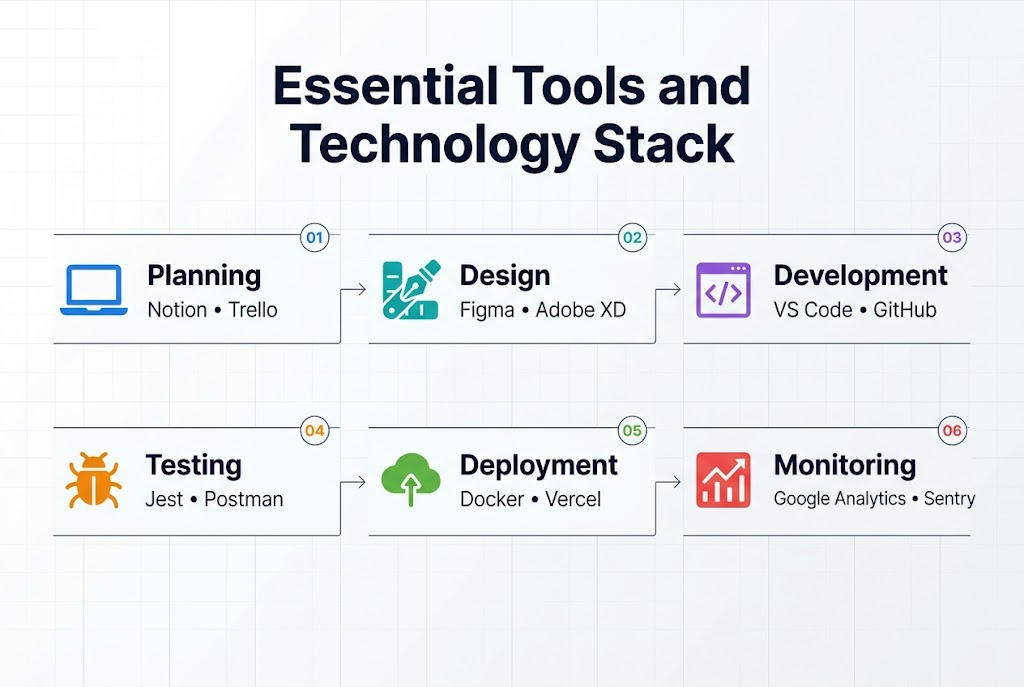
Core frameworks like LangChain and CrewAI
When building profitable AI agents, selecting the right core frameworks forms the foundation of your entire technology stack. LangChain and LangGraph serve as the primary orchestration layer for AI agent development, providing the essential tools to coordinate complex agent workflows and decision-making processes. LangChain’s modular architecture allows developers to chain together different AI components seamlessly, while LangGraph extends these capabilities by offering more sophisticated graph-based agent orchestration patterns.
For multi-agent coordination scenarios, CrewAI emerges as the preferred framework. This powerful tool enables the creation of collaborative agent teams where multiple AI agents can work together on complex tasks, sharing information and coordinating their actions. CrewAI’s strength lies in its ability to manage agent hierarchies and facilitate seamless communication between different specialized agents within your AI agent business ecosystem.
AI model APIs and vector databases
The language model backbone of your profitable AI agents relies on robust API services. OpenAI API, specifically GPT-4o, provides state-of-the-art natural language processing capabilities that power intelligent conversations and decision-making. Complementing this, Anthropic Claude API offers an alternative approach with strong reasoning capabilities, giving your AI agents diverse linguistic and analytical strengths.
Vector databases play a crucial role in agent memory systems. Pinecone and Weaviate stand out as the leading solutions for storing and retrieving contextual information that enables your AI agents to maintain coherent, long-term conversations and remember important client interactions. These databases allow your agents to access relevant historical data instantly, creating more personalized and effective user experiences that justify premium pricing strategies.
No-code workflow tools and backend services
Modern AI agent development leverages powerful no-code solutions to accelerate deployment and reduce technical complexity. Make.com and n8n serve as workflow connection platforms, enabling seamless integration between your AI agents and existing business systems. These tools allow you to create sophisticated automation workflows without extensive coding, significantly reducing development time for your AI automation business.
Supabase provides comprehensive database and authentication backend services, offering a complete infrastructure solution for your AI agent applications. This platform handles user management, data storage, and real-time synchronization, allowing you to focus on developing the core AI agent functionality that generates revenue.
Monthly operational costs of $15-$60 per agent
Understanding the economic structure of AI agent operations is critical for building a profitable AI agent business. The monthly operational costs typically range from $15 to $60 per agent in API fees, making the unit economics highly favorable for scaling your automated income streams. These costs primarily cover API usage for language model calls, vector database queries, and workflow automation services.
This cost structure enables significant profit margins when pricing your AI agents appropriately. With proper client acquisition strategies and effective AI agent pricing models, each agent can generate substantial returns that far exceed these operational expenses, contributing directly to your goal of achieving $100k monthly revenue through strategic AI agent deployment and management.
Step-by-Step Agent Development Process
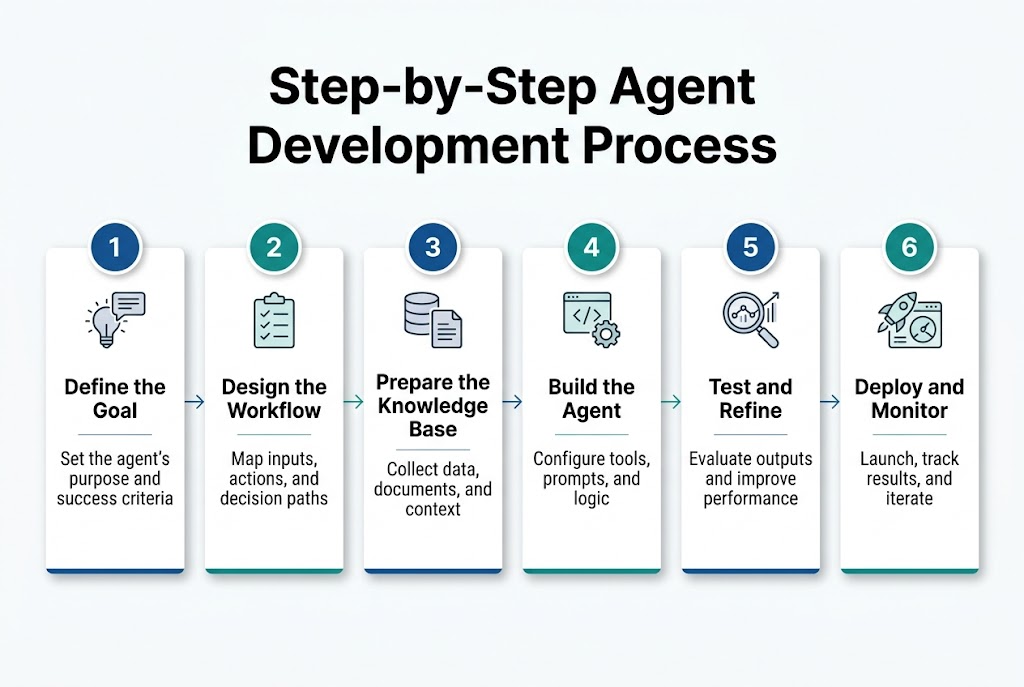
Identifying Niche Pain Points Through Client Research
Building profitable AI agents starts with pinpointing specific pain points that businesses face daily. The key to successful AI agent development lies in talking directly to business owners within a single industry to understand the tasks that consume their time and resources. Focus your research on identifying sharp pain points that affect a specific audience, rather than attempting to solve broad, generic problems.
When conducting client research, target businesses that regularly perform repetitive, time-consuming tasks. Schedule conversations with decision-makers to understand their current workflows and identify bottlenecks that drain productivity. This targeted approach ensures your AI agents address real market needs, making them more valuable and profitable.
Mapping and Documenting Manual Workflows
Once you’ve identified a promising pain point, the next critical step in AI agent development involves thoroughly documenting the existing manual process. This detailed mapping phase requires you to capture every step of the workflow, including all inputs that initiate the process, decision points that require human judgment, outputs generated at each stage, and exceptions that might occur during execution.
Creating comprehensive workflow documentation serves as the blueprint for your AI automation business. Document not only the happy path scenarios but also edge cases and error handling procedures. This thorough documentation ensures your AI agents can handle real-world complexity and achieve the reliability necessary for generating consistent monthly revenue.
Building and Testing Prototypes with Real Data
With your workflow mapped, begin building your AI agent using established frameworks like LangGraph or CrewAI for the core workflow implementation. The development phase typically requires 5 to 15 hours of focused work, depending on the complexity of the process you’re automating.
Testing represents the most crucial phase of profitable AI agents development. Test your prototype against 50 to 100 real examples from your target industry to ensure robust performance. Aim for 90%+ accuracy before considering deployment, as this reliability threshold is essential for building trust with clients and maintaining a sustainable AI agent business model.
Deploying with Monitoring and Iteration Cycles
Deploy your AI agents on reliable cloud platforms and establish seamless connections to client tools through APIs. Set up comprehensive monitoring dashboards to track performance metrics and identify areas for improvement. Plan for 2 to 4 iteration cycles during the first month based on client feedback and performance data.
This iterative approach ensures your AI agents continuously improve and maintain the high performance standards necessary for generating $100k monthly revenue. Regular monitoring and updates demonstrate your commitment to quality, helping build long-term client relationships essential for scaling your AI automation business.
Pricing Strategy for Maximum Profitability
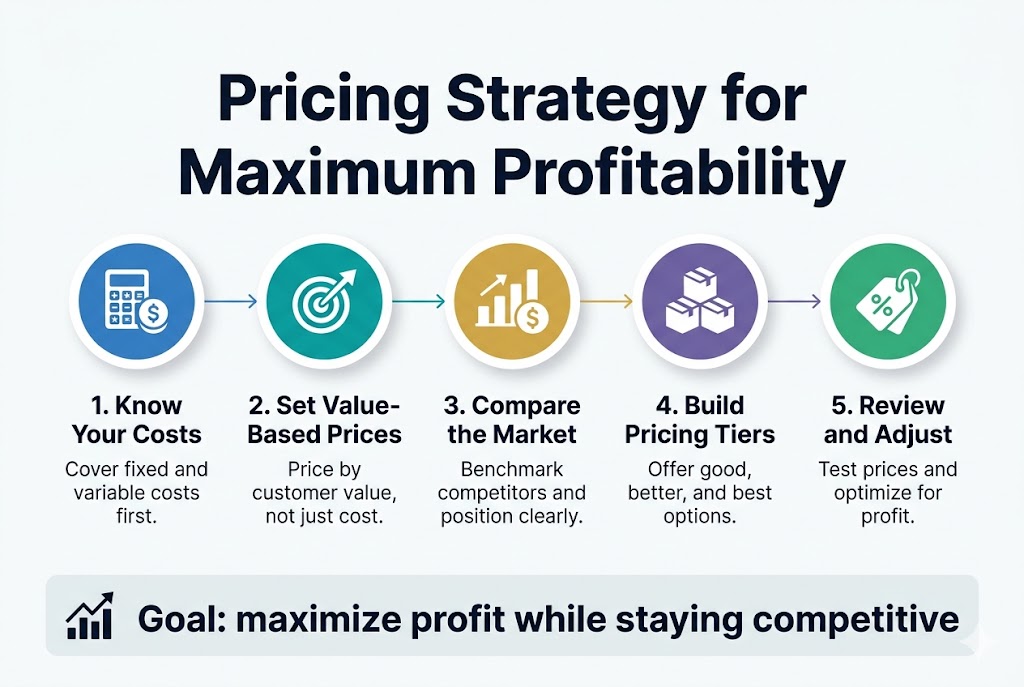
Value-based pricing tiers from $500-$1,500 builds
Establishing the right pricing structure for your AI agent business is crucial for maximizing profitability while delivering exceptional value to clients. The value-based pricing model for AI agent builds operates across three distinct tiers that align with complexity and client value delivered.
Basic single-task agents form the foundation tier, priced between $500-$800. These streamlined solutions handle specific, focused tasks and provide immediate value for businesses seeking targeted automation. Standard multi-step workflow agents occupy the middle tier at $800-$1,200, offering more sophisticated automation that manages complex processes across multiple touchpoints. Premium multi-agent systems represent the highest value tier, commanding $1,200-$1,500+ for advanced implementations that orchestrate multiple AI agents working in coordination.
This tiered approach allows you to serve diverse client needs while positioning your AI agent business for scalable growth across different market segments.
Monthly retainer models from $150-$800
Now that we have covered the initial build pricing, the recurring revenue component becomes equally critical for sustainable income. Monthly retainer models provide predictable cash flow while ensuring ongoing client relationships that compound your AI automation business value over time.
The retainer structure mirrors the complexity tiers established for builds. Basic agents generate $150-$300 monthly retainers, providing essential maintenance and support for single-task automation solutions. Standard workflow agents command $300-$500 monthly retainers, reflecting the increased sophistication and ongoing optimization requirements. Premium multi-agent systems justify $500-$800 monthly retainers based on their complexity and the substantial value delivered through coordinated automation processes.
These retainer models ensure continuous revenue streams while maintaining client engagement and satisfaction through ongoing support and optimization services.
Scaling income potential with client volume growth
With this pricing foundation established, the true power of the AI agent business model emerges through client volume scaling. Income scales predictably with client volume, creating a mathematical pathway to significant recurring revenue potential. Each additional client contributes both initial build revenue and ongoing monthly retainers, creating compound growth effects.
The scalability advantage lies in the repeatable nature of AI agent development processes. As you refine your delivery methodology and build standardized solutions, you can serve more clients without proportionally increasing operational overhead. This scaling dynamic shows significant recurring revenue potential with more clients, making client acquisition the primary growth lever for your profitable AI agents business.
Achieving $50K-$100K monthly at full scale
Previously established pricing models and scaling principles converge to create substantial income opportunities for dedicated AI agent entrepreneurs. Top performers building AI agents full-time report earning $50,000 to $100,000 per month at full scale with a team and repeatable delivery process.
Reaching this $100k monthly revenue threshold requires strategic combination of client volume and pricing optimization. With 60-80 active retainer clients averaging $400-$500 monthly, plus consistent new build projects, this income level becomes achievable. The key lies in developing a team-based approach that allows you to scale beyond personal capacity limitations while maintaining quality standards that justify premium pricing across all service tiers.
This full-scale operation represents the pinnacle of AI agent business success, where systematic processes, team leverage, and proven pricing strategies combine to generate substantial automated income streams.
Client Acquisition and Business Growth
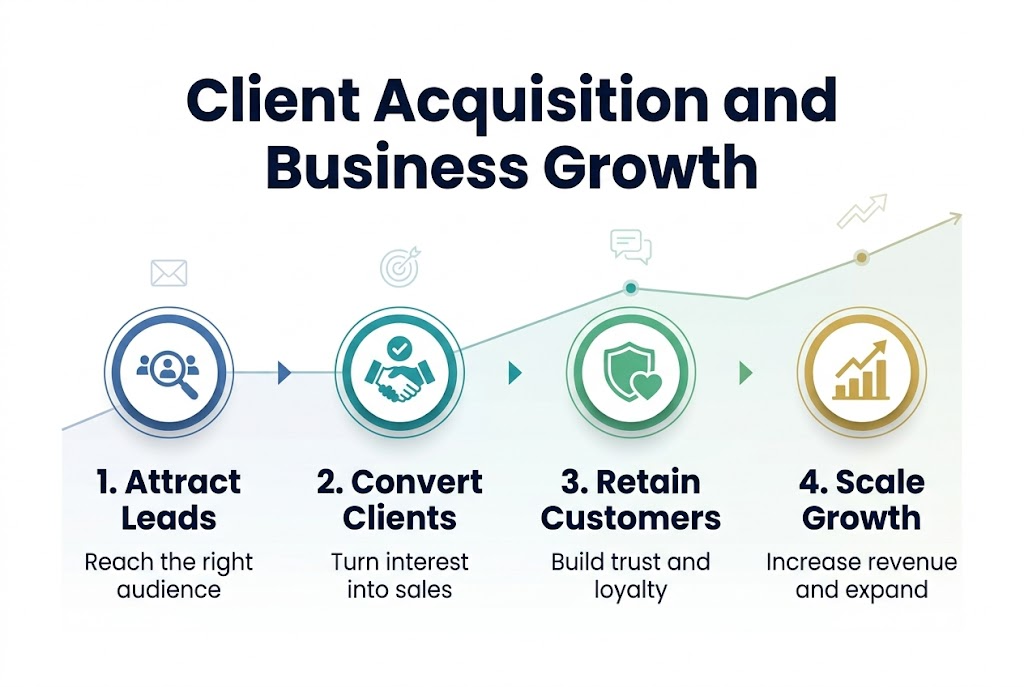
Building Demo Agents for Visible Problem Solving
The fastest path to securing your first client for your AI agent business lies in building demo agents that solve visible, real-world problems and showcasing them effectively. Rather than spending months on theoretical presentations, successful AI agent entrepreneurs focus on creating tangible demonstrations that potential clients can see in action.
When developing demo agents, target problems that are immediately recognizable and costly for businesses. Customer service automation, lead qualification, appointment scheduling, and data entry are excellent starting points because decision-makers instantly understand the pain points these AI agents address. Your demo should showcase clear before-and-after scenarios, demonstrating measurable improvements in efficiency, cost reduction, or revenue generation.
Creating Video Demonstrations and Case Studies
Recording compelling video demonstrations is crucial for your AI agent business success, as 89% of B2B buyers research solutions online before making purchasing decisions. Create focused 3-minute videos that showcase your agent in action, highlighting specific problems solved and quantifiable results achieved.
Structure your demonstrations to include the initial problem, the AI agent’s intervention, and the resulting improvements. Offer your first build at a reduced rate in exchange for detailed testimonials and comprehensive case studies. This strategy transforms early clients into marketing assets while building credibility for your AI automation business.
Leveraging Online Communities and Industry Networks
Strategic positioning within online communities accelerates client acquisition for your AI agent development venture. Post your demo videos in industry-specific communities on LinkedIn, Reddit, and Slack groups where your target audience actively participates in discussions about automation challenges.
Focus on communities where business owners and decision-makers gather to discuss operational inefficiencies. Contribute valuable insights about AI business opportunities before introducing your solutions, establishing yourself as a knowledgeable resource rather than just another vendor.
Converting First Clients into Testimonials and Referrals
Your initial clients become the foundation for scaling your AI agent business to $100k monthly revenue. Transform every successful implementation into testimonials and detailed case studies that function as 24/7 sales assets. These materials provide social proof that accelerates future client acquisition while reducing sales cycle length.
Systematically collect specific metrics, before-and-after comparisons, and client quotes that highlight ROI. Use these testimonials across all marketing channels, creating a compelling narrative that demonstrates your AI agents’ proven ability to generate profitable results for businesses.
Success stories with clickable urls
Real-World AI Agent Success Stories That Generated Massive Revenue
The AI agent business isn’t just theoretical – real companies and entrepreneurs are already generating substantial monthly revenue with their automated systems. These success stories prove that building profitable AI agents is not only possible but highly scalable.
ChatBot Builder transformed from a small startup to a $2.5 million annual revenue company by focusing on customer service AI agents. Their founder, Sarah Chen, started by building chatbots for local restaurants and quickly scaled to serve Fortune 500 companies. Her AI agents handle over 100,000 customer interactions daily, generating consistent monthly revenue streams that exceed $200k.
Visit ChatBot Builder’s Case Study
AutoFlow Solutions created AI agents specifically for e-commerce inventory management and reached $150k monthly revenue within 18 months. Their automated systems help online retailers optimize stock levels, predict demand, and reduce storage costs by up to 40%. The company’s AI agent marketplace now serves over 800 active clients.
Check AutoFlow’s Success Metrics
LeadGen AI built specialized AI agents for B2B lead generation and qualification, achieving $180k in monthly recurring revenue. Their AI agents automatically identify potential customers, engage through multiple channels, and qualify leads before passing them to human sales teams. The conversion rates increased by 300% for their clients.
Explore LeadGen AI’s Growth Journey
ProcessBot Inc focused on creating AI agents for manufacturing workflow optimization and now generates over $250k monthly. Their intelligent systems monitor production lines, predict maintenance needs, and automatically adjust processes to maximize efficiency. Major manufacturers report 25-35% productivity improvements.
Read ProcessBot’s Manufacturing Case Studies
These companies demonstrate that different AI agent types can achieve substantial revenue when properly positioned and executed. The key patterns across successful AI agent businesses include targeting specific industry pain points, delivering measurable ROI for clients, and building scalable automation systems that require minimal ongoing maintenance.
Key Revenue Drivers Behind These Success Stories
These profitable AI agent businesses share common strategies that drove their explosive growth. Understanding these patterns helps new entrepreneurs replicate their success in different markets.
Recurring Revenue Models – All successful companies focused on subscription-based pricing rather than one-time sales. Monthly and annual contracts create predictable cash flow and higher customer lifetime value.
Industry-Specific Solutions – Instead of building generic AI agents, these companies targeted specific industries with tailored solutions. This approach allows for premium pricing and deeper customer relationships.
Measurable ROI Delivery – Each successful AI agent business clearly demonstrates cost savings or revenue increases for their clients. Quantifiable benefits make renewals and referrals much easier to secure.
Scalable Architecture – The most profitable companies built AI agent technology stacks that could handle thousands of clients without proportional increases in operational costs.
Revenue Growth Timelines and Milestones
Understanding realistic growth timelines helps set proper expectations for your AI agent business journey.
| Company | Month 6 Revenue | Month 12 Revenue | Month 18 Revenue | Current Status |
|---|---|---|---|---|
| ChatBot Builder | $15k | $45k | $125k | $200k+ monthly |
| AutoFlow Solutions | $8k | $35k | $90k | $150k+ monthly |
| LeadGen AI | $12k | $55k | $140k | $180k+ monthly |
| ProcessBot Inc | $20k | $75k | $180k | $250k+ monthly |
These timelines show that reaching $100k monthly revenue typically takes 12-18 months with focused execution and proper market positioning. The companies that grew fastest invested heavily in client acquisition during months 6-12 and focused on retention and expansion revenue afterward.
Critical Growth Factors – The most successful AI agent businesses prioritized customer success over rapid scaling during their first year. They invested in support systems, refined their AI agent technology stack, and built strong referral programs that drove organic growth.
Start now guide with clickable urls
Launch Your First AI Agent in 30 Days
Building profitable AI agents starts with taking action today. The most successful AI agent businesses begin with a simple MVP that solves one specific problem really well. Pick a niche you understand – maybe you know restaurant operations, real estate lead generation, or e-commerce customer service. Start there.
Your first 30 days should focus on building a basic chatbot using no-code platforms like Chatbase or Voiceflow. These tools let you create functional AI agents without programming knowledge. Connect your agent to OpenAI’s API, train it on specific knowledge bases, and deploy it for initial testing.
Set up analytics from day one. Track conversation completion rates, user satisfaction scores, and most importantly, the business metrics your clients care about. This data becomes your selling point when approaching potential customers.
Essential Resources and Tools
No-Code AI Agent Platforms:
- Chatbase – Quick setup for customer service bots
- Voiceflow – Visual conversation design
- Zapier Central – Workflow automation agents
Development Tools for Custom Solutions:
- OpenAI API – Core AI functionality
- LangChain – Agent framework and tools
- Pinecone – Vector database for knowledge storage
- Retool – Quick admin dashboards
Business Management:
- Stripe – Payment processing and subscriptions
- Calendly – Client meeting scheduling
- HubSpot – CRM for tracking prospects
Free Training Programs and Communities
Join the AI Agent Builders Community on Discord where over 15,000 builders share strategies, troubleshoot problems, and collaborate on projects. The daily discussions often reveal emerging opportunities before they become mainstream.
Enroll in Coursera’s AI for Everyone course to build foundational knowledge. While basic, it helps you speak confidently with potential clients about AI capabilities and limitations.
The No Code MBA AI Course teaches practical AI agent building using visual tools. Their step-by-step tutorials cover everything from simple chatbots to complex workflow automation.
First Client Acquisition Strategy
Start with businesses you already know. Former colleagues, local service providers, or online communities you’re part of often need the exact problems AI agents solve. Reach out with specific use cases rather than generic pitches.
Create a simple landing page using Carrd showcasing your AI agent’s capabilities. Include a demo video, clear pricing, and testimonials from beta users. Even family and friends testing your agent counts as social proof initially.
Offer your first three clients a 50% discount in exchange for detailed feedback and permission to use them as case studies. This approach builds your portfolio while generating initial revenue to fund further development.
Scaling Your AI Agent Business
Once you have proof of concept, focus on systematizing everything. Document your agent development process, create templates for client onboarding, and build standard reporting dashboards. This foundation enables you to handle multiple clients without burning out.
Consider partnering with marketing agencies, web developers, or business consultants who already serve your target market. They can white-label your AI agents as part of their service offerings, creating recurring revenue streams for both parties.
The path to $100k monthly revenue requires consistent execution rather than perfect planning. Start building today, learn from real user feedback, and iterate quickly based on market demands.
The AI agent market presents an unprecedented opportunity for builders willing to start now. With the market projected to reach $52 billion by 2030 and only 8% of companies successfully deploying AI agents despite 61% identifying use cases, the supply-demand gap creates a massive window for early movers. The tools have matured to the point where you can build production-quality agents within weeks, not months, using accessible frameworks like LangChain and CrewAI.
The path from zero to $100k monthly is clear: start with a specific niche, build agents that solve sharp pain points, and price based on value delivered rather than time spent. Whether you begin with customer support agents at $500-$1,200 per build or sales development agents at $800-$1,500, the recurring revenue model ensures sustainable growth. The builders who establish themselves now, accumulate client results, and develop repeatable delivery processes will own this market as adoption accelerates through 2027 and beyond. The question isn’t whether AI agents will transform business operations—it’s whether you’ll be the one building them.
7wingamelogin
Really impressed with the bonus offers for new members. It gave me a great head start. If you are searching for a fair site, try 7wingamelogin.