
Currently Empty: CFA0.00



Blog
From Distraction to 100% Distinction: Mastering Digital Learning in 2026

From Distraction to 100% Distinction
From Distraction to 100% Distinction: Mastering Digital Learning in 2026
From Distraction to 100% Distinction: Mastering Digital Learning in 2026
AI is everywhere in 2026 — inside your LMS, your browser, your slide deck, and probably your to-do list. But more tools don’t automatically mean better learning. For L&D professionals, instructional designers, and educators who want real results, the challenge right now isn’t finding AI-powered learning tools — it’s knowing how to use them without losing what actually makes learning stick.
This post is for learning teams ready to stop experimenting randomly and start building something that works. If you’re designing courses, managing digital programs, or trying to get your organization genuinely skilled up — not just certified — this is where to focus your energy.
Here’s what we’ll cover:
- Why digital learning strategies in 2026 need to shift from AI hype to intentional practice — and what that looks like day-to-day
- How to redesign assessment so learners can’t just hand the work off to a chatbot — and actually prove what they know
- What a sustainable digital learning strategy looks like when budgets tighten and the tooling keeps changing
Let’s get into it.
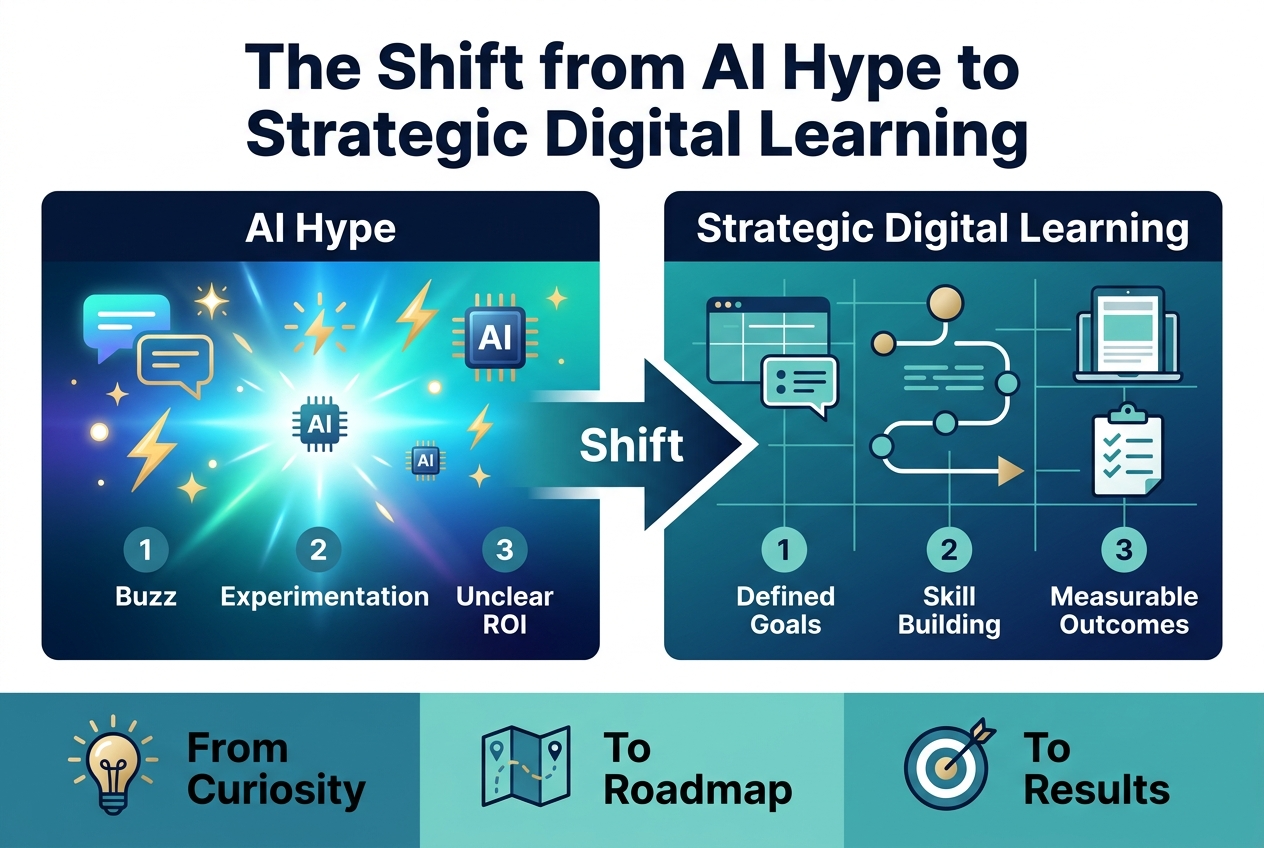
The Shift from AI Hype to Strategic Digital Learning
Why 2026 Is the Year of Outcomes Over Novelty
If 2024–25 were the years of “try everything,” 2026 is where learning teams get strategic, human, and measurable. The conversation has decisively shifted from chasing novelty to delivering outcomes:
- Credible, high-quality content
- Authentic assessment
- Accessible learning experiences
- Change that actually sticks
Digital learning strategies 2026 are no longer defined by what’s new — they’re defined by what works.
How AI Has Become Embedded in Every Learning Tool
AI in education has moved well beyond optional add-ons. Today, it’s infused into nearly every tool learning teams touch — what some describe as the “Clippy-on-steroids” phase, where every app opens by asking how its AI can help.
This saturation means AI-powered learning tools are no longer a differentiator. They’re the baseline.
Moving from Experimentation to Intentional Design
With this in mind, the critical lesson for L&D professionals is intentionality. When every team experiments differently — with no shared direction — momentum fractures and trust erodes.
Mastering online learning in this environment requires moving from scattered pilots to purposeful, coordinated design. Consistent frameworks replace one-off experiments, ensuring that AI adoption builds cumulative progress rather than isolated noise.
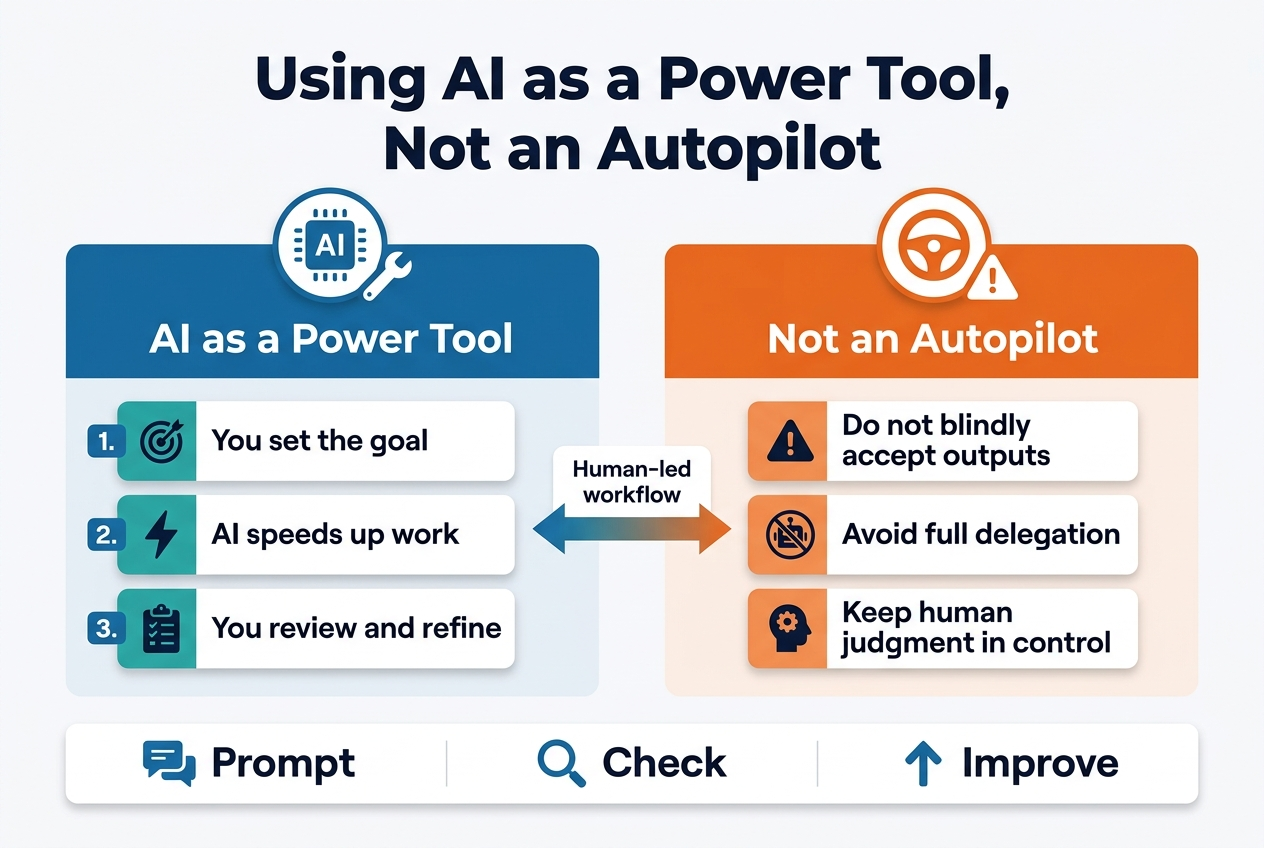
Using AI as a Power Tool, Not an Autopilot
How Mainstream Tools Like NotebookLM Are Transforming Practice and Feedback
NotebookLM’s recent updates—mind maps, quizzes, and comprehension checks—have quietly repositioned it as a robust practice and feedback engine. For digital learning strategies in 2026, this means learners gain structured reinforcement without requiring custom-built infrastructure.
Leveraging AI for Faster Scenario Creation and Multilingual Content
AI-powered learning tools like Runway and HeyGen are compressing production timelines dramatically:
- Video scenario generation produces lifelike learning prompts in hours, not weeks
- Voice and translation tools deliver multilingual content assets at scale
- Realistic contexts improve learner engagement and situational authenticity
This acceleration directly supports mastering online learning across diverse, global audiences.
Building an AI Adoption Playbook with Clear Roles and Guardrails
Treating GenAI as a power tool, not an autopilot, requires deliberate governance. A structured AI adoption playbook should define:
| Element | Purpose |
|---|---|
| Roles | Clarify who creates, reviews, and approves AI outputs |
| Policies | Establish ethical and instructional boundaries |
| Approval paths | Ensure quality and compliance checkpoints |
| Minimal viable stacks | Standardize trusted tools across teams |
With this in mind, consistent guardrails keep AI in trained hands—building an approach that is both innovative and trustworthy.
Making Change Management the Engine of AI Success
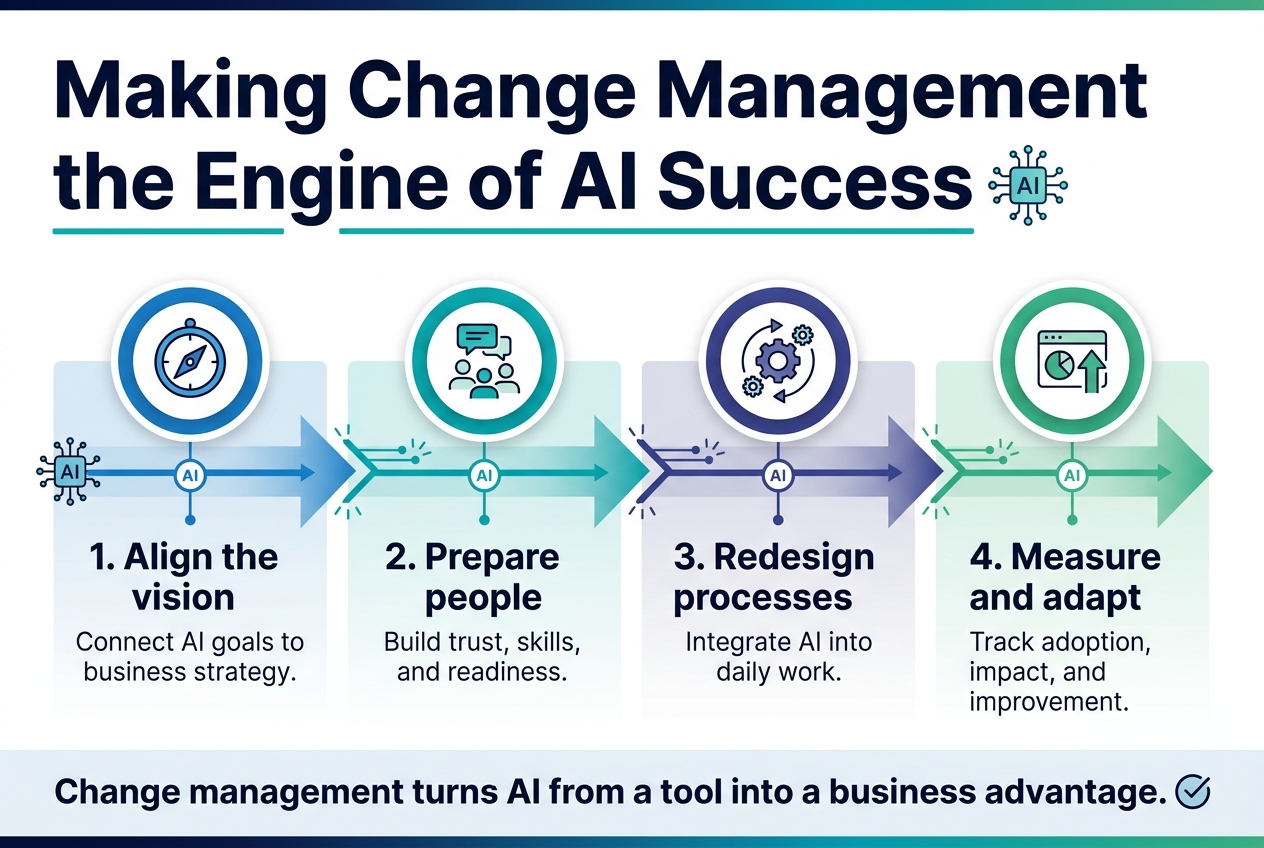
Why Organizations That Run Change Outperform Those That Just Run Tools
After a year of enterprise AI work, one pattern is undeniable: winning organizations aren’t simply deploying tools — they’re running structured change. That distinction separates meaningful outcomes from expensive experiments.
Success begins with role analysis — identifying who does what and where AI can safely augment human work before any tool goes live.
Building AI Literacy Frameworks Across Your Learning Team
With this in mind, a robust AI literacy framework becomes your foundation. Effective frameworks anchor around:
- Responsible AI and ethics
- Data use and policy-in-course
- Prompt crafting skills
- Critical evaluation of AI outputs
- Accessibility awareness
These aren’t optional modules — they’re the skills framework every learning team needs to adopt change management in e-learning as a genuine discipline, not a checkbox exercise.
Designing Learning for the Flow of Work, Not Just the Course Shell
Previously, learning lived inside the LMS. Now it’s happening across Teams, Slack, and social spaces too.
Digital learning strategies 2026 must reflect ecosystem thinking — designing for where work actually flows, not just where courses are hosted. Learning needs to meet people in the moments that matter most.
Redesigning Assessment for Authenticity and Integrity
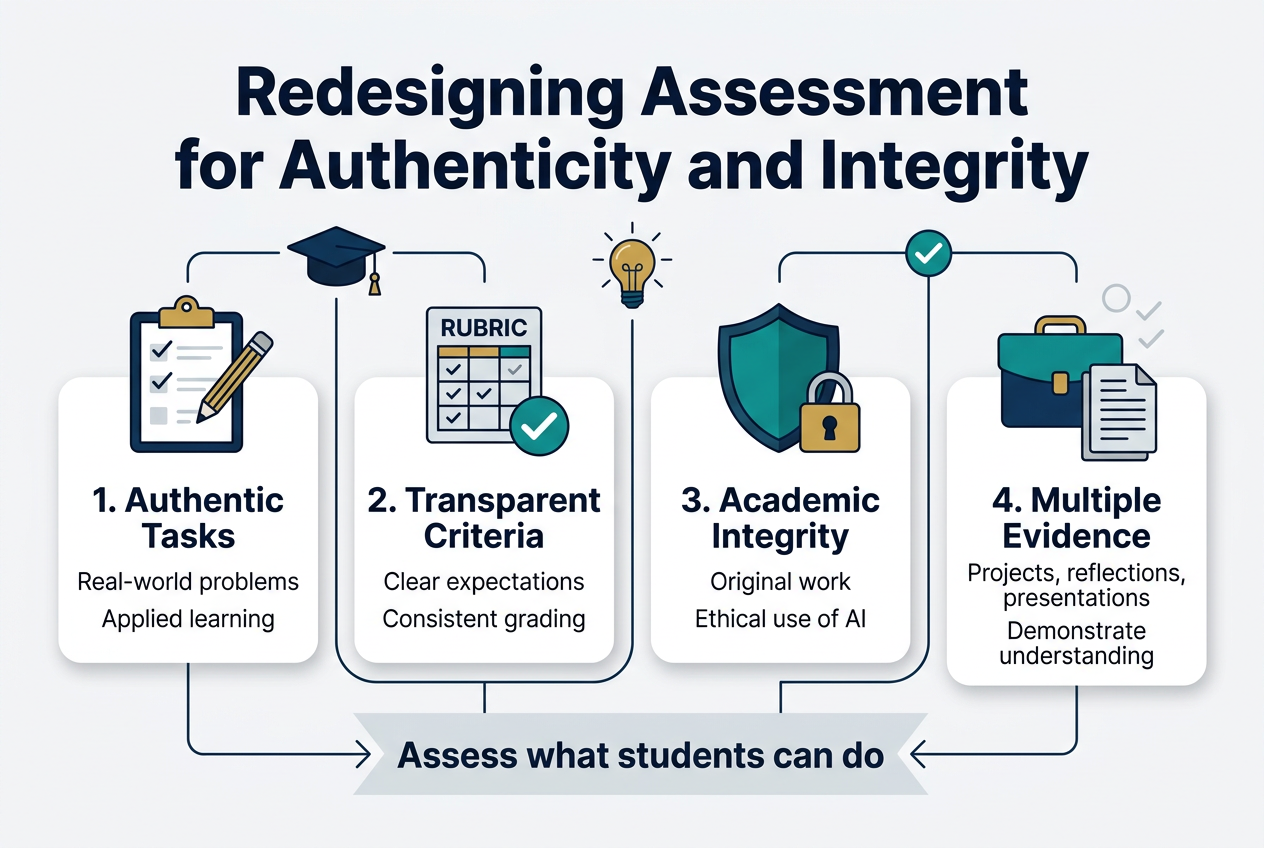
Why Traditional Quizzes and Essays Are No Longer Enough
Agentic browsers and generative AI tools have made the classic “seven modules of MCQs plus an essay” format obsolete. With AI capable of drafting polished responses in seconds, assessment integrity demands a fundamental redesign toward task-based, social, and reflective formats that genuinely reveal learner capability.
Teach-Back, Case Debates, and Portfolio Evidence as Effective Alternatives
Authentic assessment strategies worth adopting include:
- Teach-back assessments – Learners select a concept early, then teach it live or via video, fielding peer Q&A and critiquing AI-suggested content
- Case debates and role-plays – Team-based positions with rotating roles and reflective submissions documenting what peers argued and how decisions evolved
- Portfolio evidence – Real or simulated work artifacts with traceable iterations showing AI’s contributions alongside the learner’s rationale
Designing Assessments That Show Learner Thinking and AI Transparency
With this in mind, effective prompts make thinking visible:
> “Show the steps you took, what AI suggested, what you kept or changed, and why. Reference at least one peer’s feedback.”
> “Record a 3-minute debrief explaining how you validated facts, including what an expert corrected.”
These approaches embed AI transparency directly into the authentic assessment strategies themselves.
Re-Centering Subject Matter Experts in an AI-Driven World
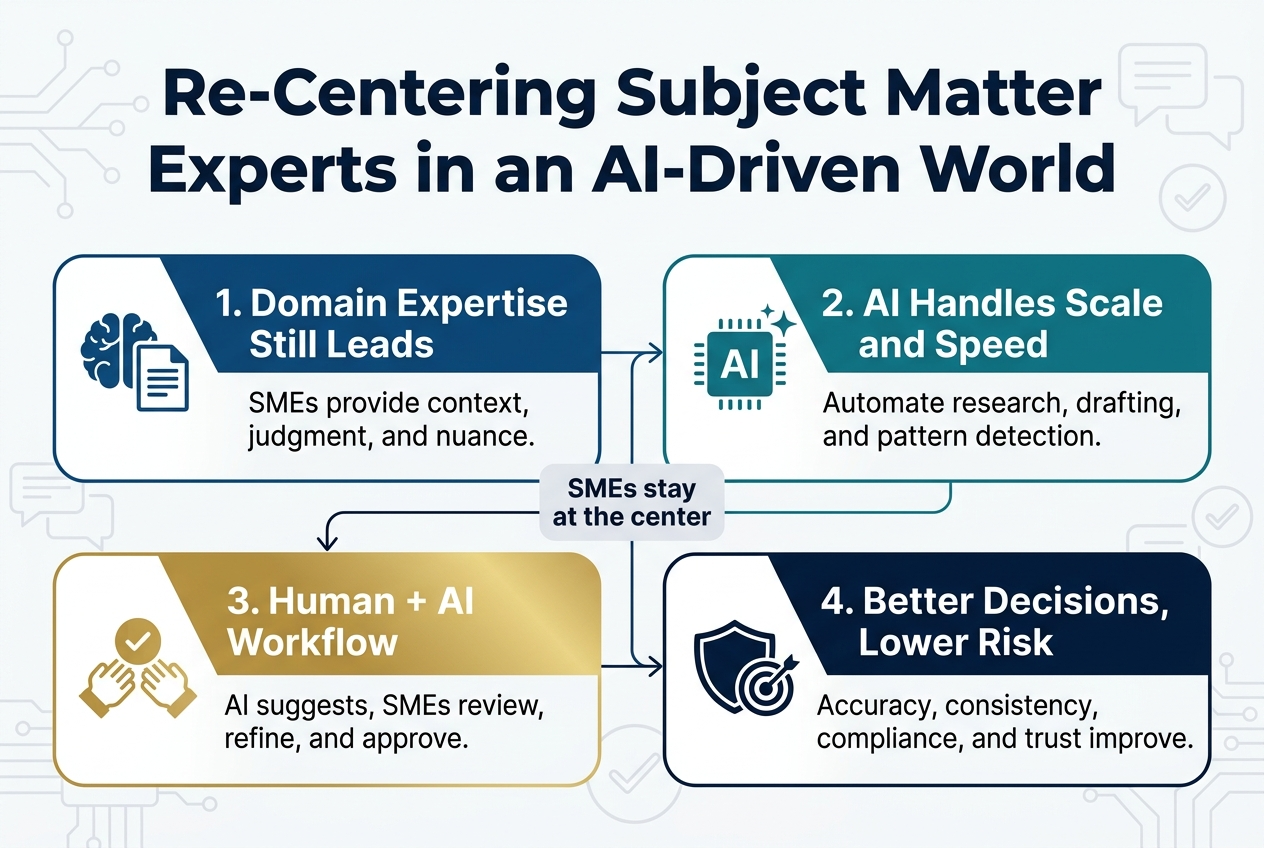
What AI Cannot Replace: Credibility, Context, and Lived Judgment
AI can draft competent content, but it cannot fabricate credibility, context, or lived judgment. That gap is precisely where the Subject Matter Expert’s (SME) new value proposition lives. In AI-powered learning tools, the SME becomes the irreplaceable human anchor.
Shifting SMEs from Content Creators to Curators and Checkpoint Coaches
With this in mind, the SME role must evolve from building content from scratch to curation and critique. Key responsibilities shift to:
- Providing just-in-time interventions inside simulations and role-plays where nuance matters most
- Applying context stamps — answering, “What would actually happen here, at our company, in our market, with our constraints?”
This positions SMEs as strategic validators rather than production resources.
A Practical SME Model That Maximizes Impact in Minimal Time
Now that we’ve covered the SME’s evolved role, here’s a high-impact model that respects their time:
| Phase | Activity |
|---|---|
| Pre-Work | AI-assisted; learners consume materials and generate questions |
| Simulation | Conversational AI or video-driven scenario |
| SME Checkpoint | 15–30 minutes of targeted feedback on decisions and alternatives |
| Evidence Pack | Documents evolution from first draft to SME-informed decisions |
This structure maximizes SME impact within minimal time investment.
Evolving Micro-Credentials into Stackable, Applied Pathways
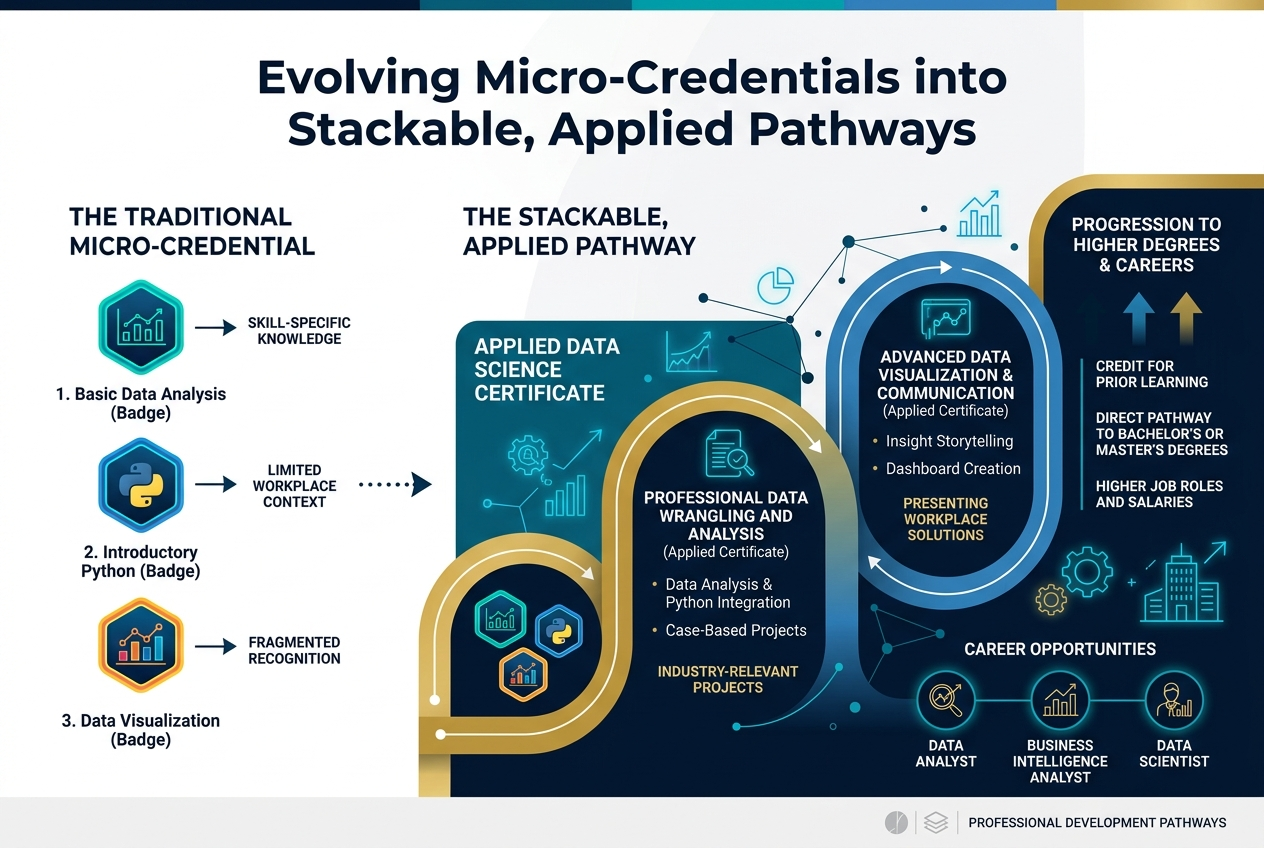
Why Many Micro-Credentials Have Fallen Short and How to Fix Them
Many micro-credentials have been underspecified — built on weak definitions, thin experiences, and vague outcomes. In 2026, a meaningful reset is underway, shifting toward:
- Authentic, applied assessment replacing quizzes at scale
- Industry co-design embedded early in credential development
- AI transparency built directly into assessment rubrics
Aligning Credentials to Real Job Outputs and Industry-Co-Designed Competencies
With this in mind, the credibility of micro-credentials in digital learning strategies 2026 depends entirely on evidence alignment. Credentials must map to real job outputs — the deliverables that employers and stakeholders actually value — not abstract learning objectives.
| Old Approach | Evolved Approach |
|---|---|
| Vague outcome statements | Job-linked competencies |
| Generic assessments | Industry co-designed rubrics |
| Isolated knowledge checks | Applied, transferable evidence |
Giving Learners a Visible Stacking Map from Day One
Stackable learning only delivers value when learners can see the path clearly. Institutions should provide a transparent stacking map from day one, showing how 5, 10, or 20 credit chunks progressively aggregate toward recognized awards. This visibility transforms micro-credentials from isolated certificates into coherent, motivating applied learning pathways.
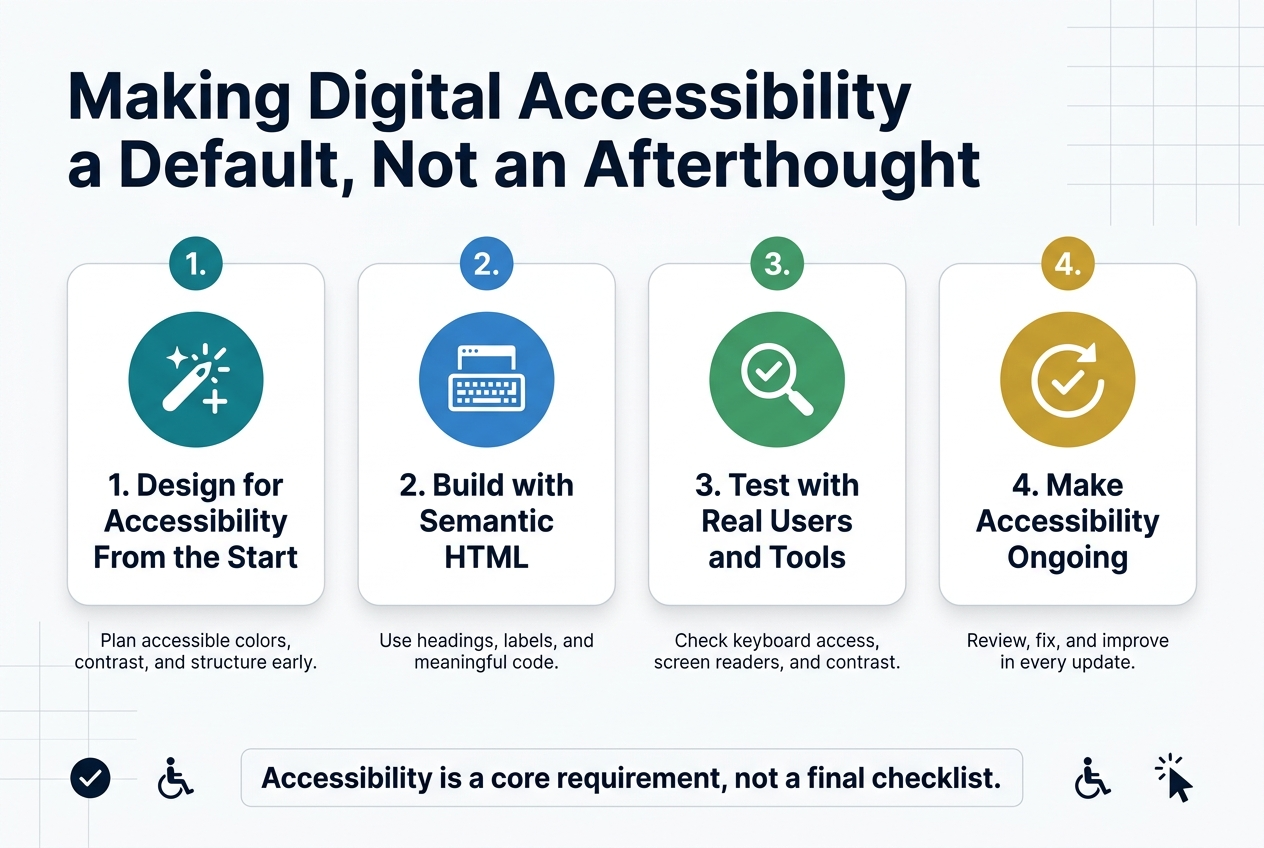
Making Digital Accessibility a Default, Not an Afterthought
Why Accessibility Is the Top In-Demand Digital Learning Skill for 2026
Digital accessibility tops the list of most requested skills heading into 2026, according to ALT (Association for Learning Technology) events. As digital learning strategies 2026 evolve, accessibility is no longer optional — it’s a professional baseline.
Using AI-Powered Tools to Catch and Fix Accessibility Issues Early
AI won’t automatically solve accessibility challenges, but it significantly lowers the friction of doing it properly. AI-powered learning tools can flag common issues early, including:
- Contrast ratios that fail readability standards
- Missing or poor alt text on images
- Caption quality in video content
- Document structure that breaks screen reader navigation
Catching these issues at the design stage — not after launch — saves time and protects learner inclusion.
Building Multimodal Options and Validating Translations with Human Review
With this in mind, the next step is building multimodal options by default, ensuring every learner has a pathway that works for them:
- Transcripts for audio and video content
- Concise one-pagers for complex materials
- Narrated explainers for visual learners
When scaling across languages, automated translation must be validated through human review, particularly where cultural nuance or domain-specific precision is critical to learning integrity.
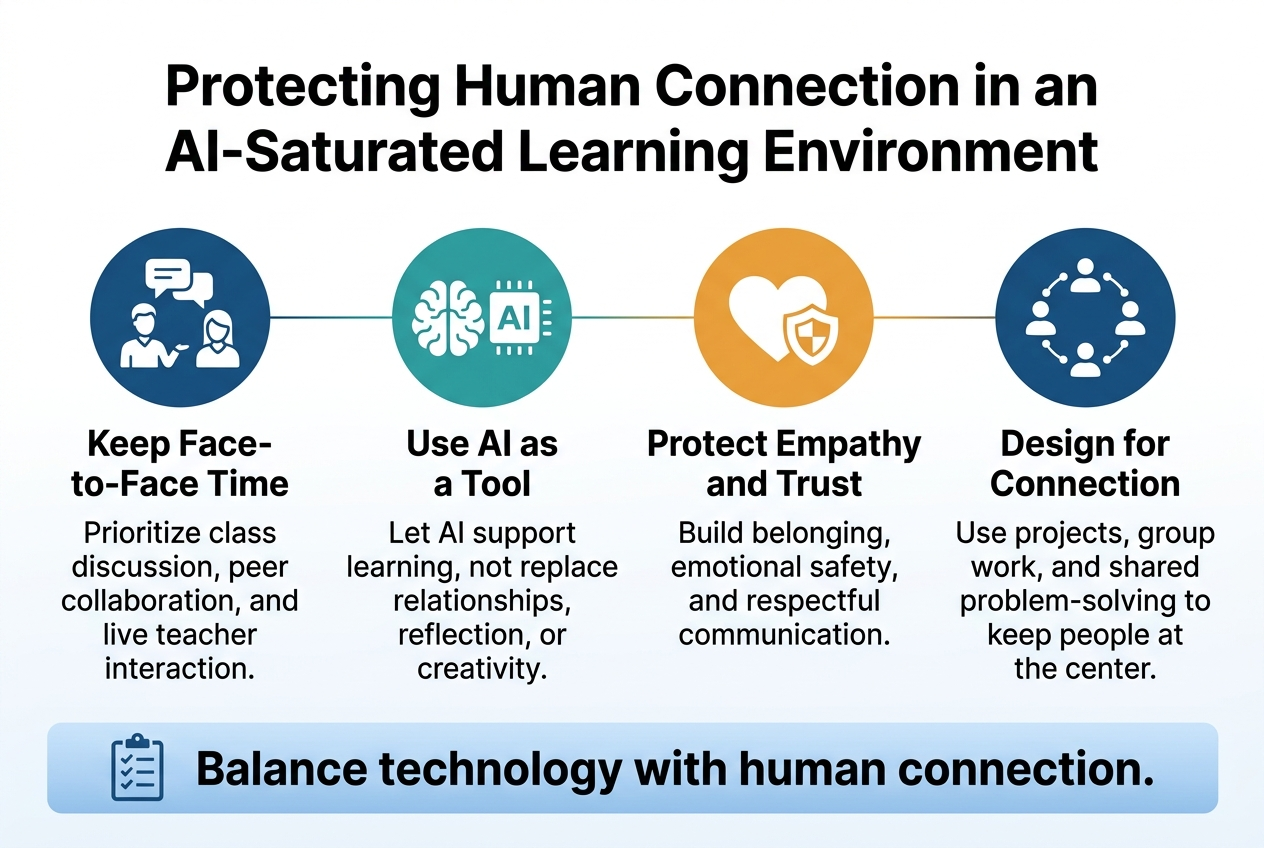
Protecting Human Connection in an AI-Saturated Learning Environment
Why Community and Social Learning Still Drive Behavior Change
AI can personalize content and simulate dialogue, but it cannot replicate the accountability and motivation that come from learning alongside peers. Community changes behavior in ways that solo AI interactions simply cannot. While traditional LMS forums have historically struggled to generate genuine engagement, the need for social learning remains stronger than ever in human connection in AI learning environments.
Designing Social Learning Where Learners Already Spend Their Time
With this in mind, the solution is to meet learners where they already are. Shift discussions and collaborative moments into Teams or Slack channels using light, consistent structure:
- Weekly work-in-progress threads
- Peer boost shout-outs
- Short video check-ins
Critically, tie every social interaction to an evidence artifact, so conversations produce tangible learning outputs rather than disappearing into a feed.
Creating On-Ramps That Include Quieter and Less Confident Contributors
Not every learner thrives in open group debate. Sustainable digital learning strategies must design entry points for all participation styles. Effective on-ramps include:
- Reaction prompts and quick polls
- Micro-reflections before full group sharing
- Pair-and-share structures that build confidence before broader discussion
These approaches ensure every voice contributes meaningfully, not just the loudest ones.
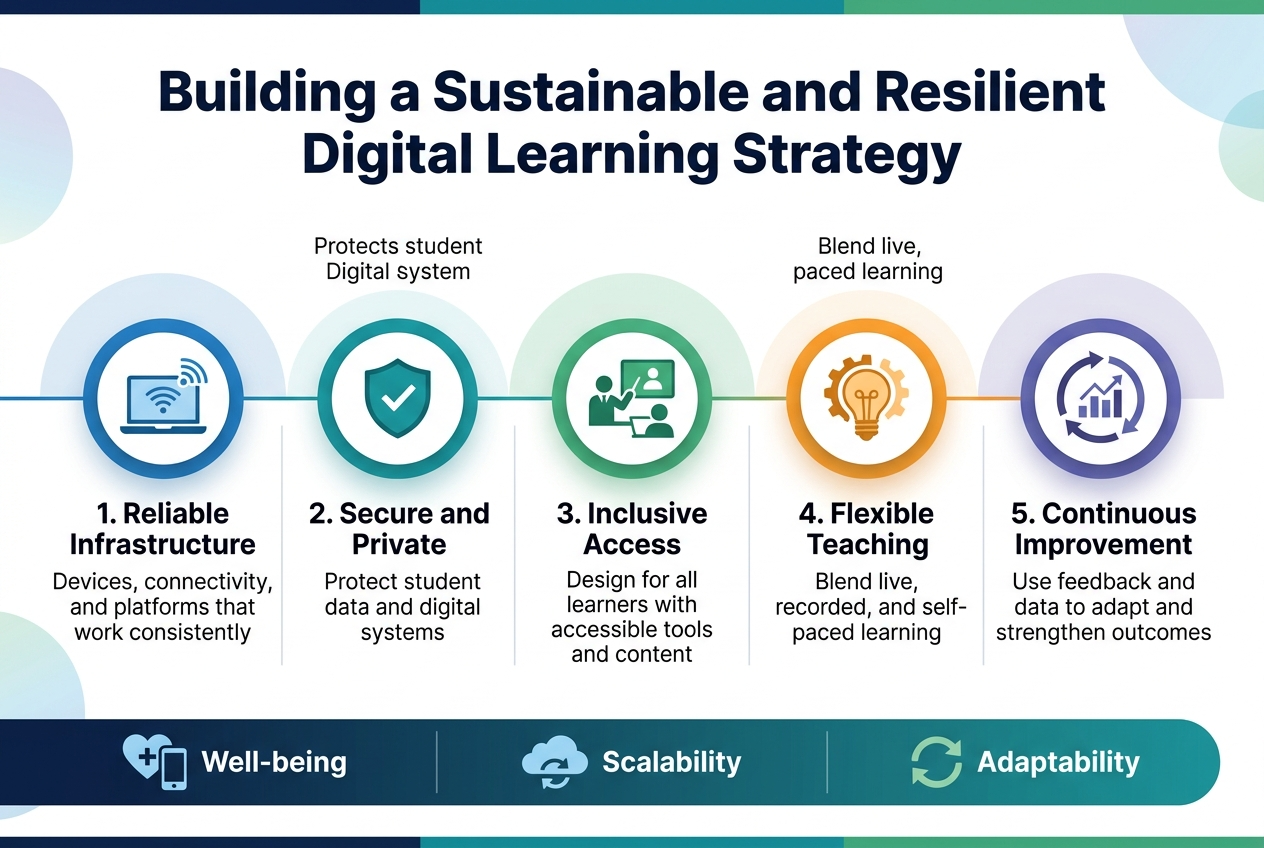
Building a Sustainable and Resilient Digital Learning Strategy
A. Navigating the Financial and Environmental Costs of Large-Scale AI
The growing unease around AI’s cost and environmental footprint is hard to ignore. A sustainable digital learning strategy prioritizes process improvements over flashy AI outputs. When budgets tighten—and they will—organizations focused on efficiency rather than novelty stay resilient.
B. Choosing Interoperable Tools That Protect Your Content Investment
With this in mind, tool selection becomes a strategic decision, not just a technical one. Build your sustainable digital learning strategy around:
- Interoperable platforms that communicate across systems
- Source-of-truth content kept decoupled from any single vendor
- Flexibility to migrate without losing your content investment
Vendor lock-in is one of the biggest risks in AI-powered learning environments. Protecting your content architecture ensures long-term resilience regardless of market shifts.
C. Teaching AI-Critical Thinking So Learners Thrive Through Any Tool Change
Now that we’ve addressed infrastructure, the human layer matters just as much. Tools will change—guaranteed. What endures is a learner’s ability to evaluate, question, and adapt.
Teaching AI-critical thinking equips learners to:
- Assess AI outputs rather than accept them blindly
- Transfer skills across different platforms and toolsets
- Remain effective even when the technology underneath them shifts
Human adaptability is the most future-proof investment in any digital learning strategy.
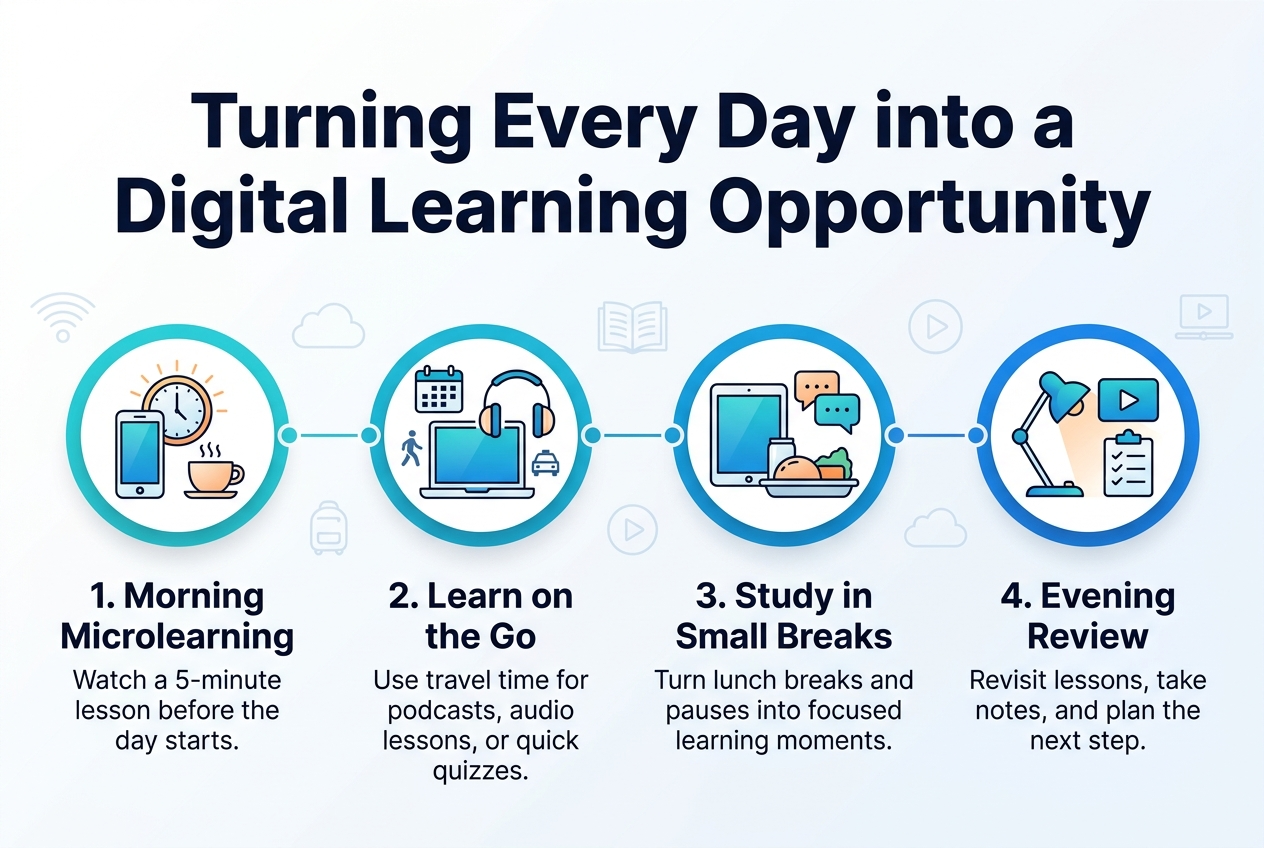
Turning Every Day into a Digital Learning Opportunity
Lessons from 12 Years of Digital Learning Day and the Movement It Built
Since its 2012 launch, Digital Learning Day (DLDay) united educators, students, district leaders, and policymakers around a shared vision — not chasing the next shiny tool, but championing innovation that genuinely supports learning, belonging, student voice, and creativity.
How Schools and Districts Can Sustain Innovation Beyond a Single Day
With this in mind, the 2026 shift is significant: the annual live production from Washington, D.C. is concluding, but the commitment deepens. The belief now is that every day should be Digital Learning Day — in every classroom, for every student. The second Thursday in February becomes an annual moment to pause, reflect, and celebrate what’s working as part of a sustainable digital learning strategy.
Practical Ways to Celebrate, Share, and Expand Digital Learning Year-Round
Now that we’ve explored the movement’s roots, here’s how to keep momentum alive year-round:
- Host an event spotlighting innovative teaching and authentic student voice
- Share a lesson or activity on social channels using
#DLDay,@officialDLDay, and@FutureReadySchools - Explore a new strategy, tool, or professional learning resource to elevate your practice
- Use February’s second Thursday to reflect, share stories, and inspire peers
2026 is not the year to keep experimenting randomly — it’s the year to get deliberate. The clearest signal from everything covered here is that the teams and educators who will lead aren’t the ones with the most tools, but the ones who use them with purpose. That means treating AI as a power tool with guardrails, putting change management at the center of every rollout, and redesigning assessment so learners show their thinking, not just their answers. It means re-centering SMEs where their judgment matters most, building micro-credentials that stack into real pathways, and making accessibility a default rather than a last-minute fix.
Above all, it means protecting what no algorithm can replicate — human connection, credibility, and community. As the movement toward making every day a digital learning day continues to grow, the goal stays the same: learning that is equitable, engaging, and visibly useful in the real world. Whether you start by redesigning two assessments, launching an AI literacy framework, or simply mapping how your micro-credentials stack, the time to act is now. You don’t have to overhaul everything at once — but you do have to start.