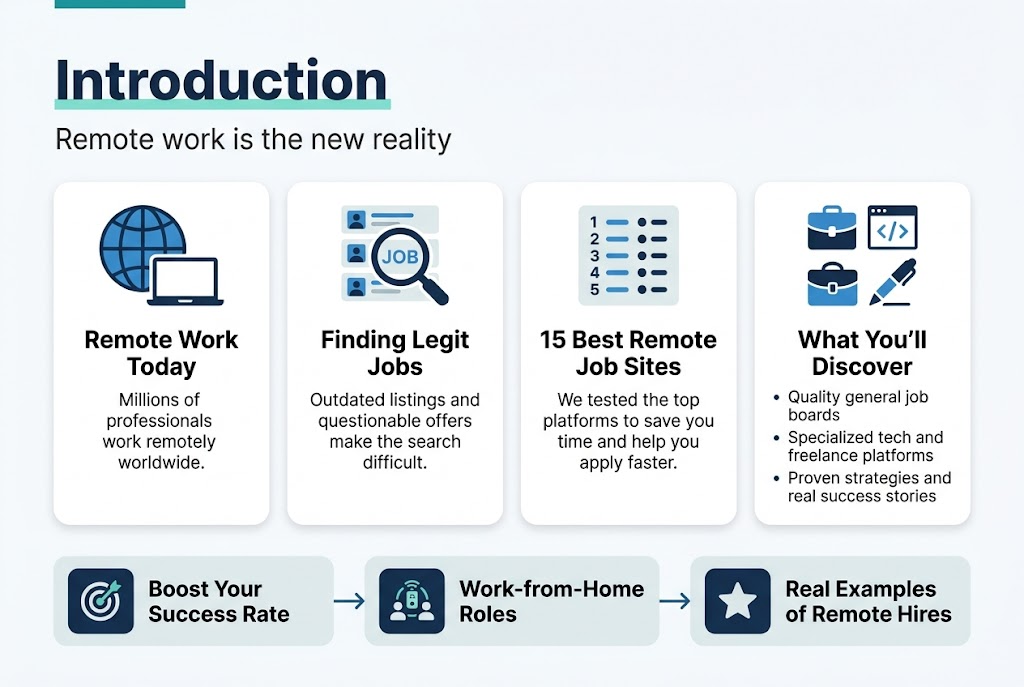
Remote work isn’t just a trend anymore—it’s the new reality for millions of professionals worldwide. Finding legitimate remote opportunities can feel like searching for a needle in a haystack, especially when so many job boards are filled with outdated listings or questionable offers.
This guide is for remote job seekers at every level, from entry-level professionals ready to ditch the commute to experienced workers looking to transition into fully remote roles. We’ve tested these 15 best remote job sites to save you time and help you land that perfect work-from-home position.
You’ll discover which general job boards actually deliver quality remote listings and learn about specialized platforms that cater to tech professionals and freelancers looking to convert gigs into full-time roles. We’ll also share proven strategies to boost your success rate and show you real examples of people who landed amazing remote jobs through these sites.
General Remote Job Boards That Deliver Results: Best Remote Job Sites
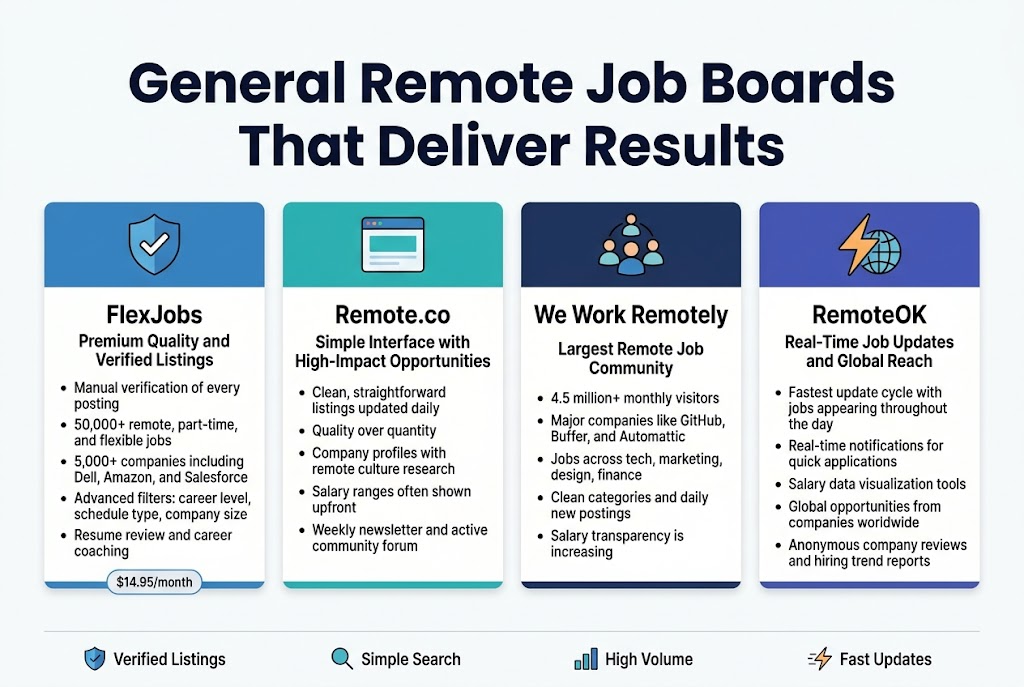
FlexJobs – Premium Quality and Verified Listings: Best Remote Job Sites
FlexJobs stands out from other platforms because every single job posting goes through manual verification. This means you won’t waste time applying to scam postings or companies that don’t actually offer remote work. The subscription fee of $14.95 per month might seem steep, but it pays for itself when you consider the time saved on legitimate opportunities.
The platform hosts over 50,000 remote, part-time, and flexible jobs across 5,000+ companies including Dell, Amazon, and Salesforce. Their advanced search filters let you narrow down by career level, schedule type, and even company size. The resume review service and career coaching sessions add serious value for job seekers who want professional guidance.
What really sets FlexJobs apart is their commitment to work-life balance. They don’t just list remote jobs – they curate positions that actually support flexible lifestyles. The company research tools help you understand each employer’s remote work culture before applying.
Remote.co – Simple Interface with High-Impact Opportunities
Remote.co keeps things refreshingly simple. No complicated algorithms or overwhelming features – just clean, straightforward job listings updated daily. The site focuses on quality over quantity, featuring positions from established companies that have proven track records with remote teams.
The platform shines with its company profiles section, where you can research potential employers’ remote work policies and team culture. Many listings include salary ranges upfront, which saves everyone time during the application process. The blog section offers practical remote work tips and company spotlights that give you insider knowledge about remote-friendly employers.
Remote.co’s weekly newsletter has become essential reading for remote job seekers. It highlights the best new opportunities and includes market insights about remote work trends. The site also maintains an active community forum where remote workers share experiences and networking opportunities.
We Work Remotely – Largest Remote Job Community
We Work Remotely operates the world’s largest remote work community with over 4.5 million visitors monthly. The platform attracts major companies like GitHub, Buffer, and Automattic, making it a goldmine for high-quality remote positions across all industries.
The site’s strength lies in its volume and diversity. You’ll find everything from entry-level customer service roles to executive positions in tech, marketing, design, and finance. The clean categorization system makes browsing efficient, and the posting frequency means new opportunities appear daily.
The platform’s reputation draws serious employers who understand remote work culture. Many companies posting here have been remote-first for years, so they know how to onboard and manage distributed teams effectively. The salary transparency has improved significantly, with more companies including compensation ranges in their listings.
RemoteOK – Real-Time Job Updates and Global Reach: Best Remote Job Sites
RemoteOK delivers one of the fastest job update cycles in the remote work space. New positions appear throughout the day, and the real-time notifications mean you can apply to opportunities within hours of posting. This speed advantage can make the difference in competitive job markets.
The platform excels at aggregating remote positions from multiple sources while maintaining a user-friendly interface. The salary data visualization tools help you understand market rates for different roles and locations. The global perspective means you’ll find opportunities from companies worldwide, not just US-based employers.
The anonymous company reviews section provides honest insights into remote work experiences at different organizations. The platform also tracks hiring trends and publishes regular reports about the remote job market, making it valuable for both job seekers and industry professionals keeping up with market changes.
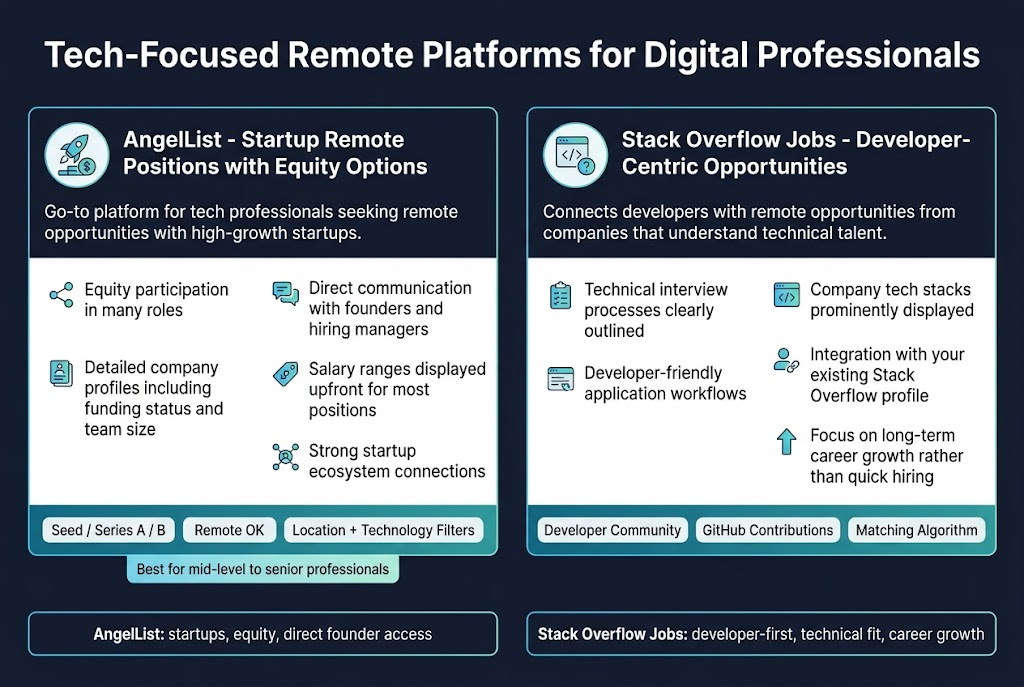
Tech-Focused Remote Platforms for Digital Professionals:Best Remote Job Sites
AngelList – Startup Remote Positions with Equity Options
AngelList has evolved into the go-to platform for tech professionals seeking remote opportunities with high-growth startups. What sets this platform apart is its focus on equity compensation, allowing you to potentially share in a company’s success while working from anywhere in the world.
The platform attracts venture-backed startups and established tech companies offering genuine remote-first cultures. You’ll find roles spanning software engineering, product management, data science, design, and marketing. The application process is streamlined – most companies prefer direct applications through their profiles rather than traditional cover letters.
Key advantages:
Equity participation in many roles
Direct communication with founders and hiring managers
Detailed company profiles including funding status and team size
Salary ranges displayed upfront for most positions
Strong startup ecosystem connections
AngelList’s filtering system allows you to search by company stage (seed, Series A, B, etc.), location preferences, and specific technologies. The “Remote OK” filter ensures you’re only seeing positions that welcome distributed teams. Many listings include detailed descriptions of remote work policies, collaboration tools, and team structures.
The platform works particularly well for mid-level to senior professionals who can demonstrate impact and want to join companies during their growth phases. Response rates tend to be higher here compared to traditional job boards, partly because the volume is more manageable and companies are genuinely committed to their posted positions.
Stack Overflow Jobs – Developer-Centric Opportunities
Stack Overflow Jobs connects developers with remote opportunities from companies that understand technical talent. The platform leverages Stack Overflow’s massive developer community, creating a natural pipeline between problem-solving and career advancement.
Companies posting here typically have strong technical foundations and appreciate developers who contribute to the broader coding community. The job matching algorithm considers your Stack Overflow activity, GitHub contributions, and stated preferences to surface relevant remote positions.
Platform strengths:
Technical interview processes clearly outlined
Company tech stacks prominently displayed
Developer-friendly application workflows
Integration with your existing Stack Overflow profile
Focus on long-term career growth rather than quick h
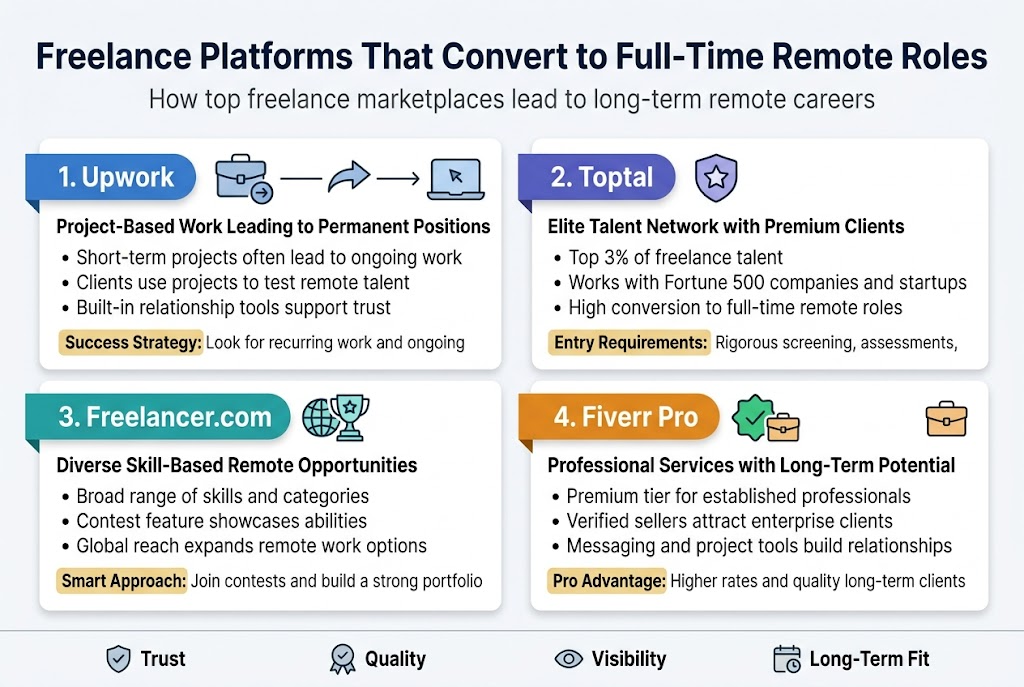
Freelance Platforms That Convert to Full-Time Remote Roles
Upwork – Project-Based Work Leading to Permanent Positions
Upwork stands out as the perfect gateway for professionals looking to transition from freelance gigs to stable remote positions. Many clients start by posting short-term projects to test potential candidates, and successful freelancers often find themselves invited to ongoing, full-time arrangements. The platform’s built-in relationship management tools make this transition seamless, allowing you to build trust through smaller projects before landing that dream remote role.
The key to success on Upwork lies in understanding client psychology. Businesses frequently use the platform to “audition” remote talent before committing to permanent hires. Start with projects that match your expertise, deliver exceptional results, and maintain open communication about your interest in long-term opportunities. Many professionals have secured six-figure remote positions by proving their worth through initial Upwork contracts.
Success Strategy: Focus on clients posting recurring work or those explicitly mentioning potential for ongoing collaboration. These signals often indicate companies testing the remote hiring waters.
Toptal – Elite Talent Network with Premium Clients
Toptal operates as an exclusive network connecting the top 3% of freelance talent with Fortune 500 companies and fast-growing startups. The rigorous screening process ensures you’re working alongside exceptional professionals and accessing clients who value quality over cost. This premium positioning naturally leads to higher conversion rates for full-time remote opportunities.
The platform’s clientele includes companies like Motorola, Airbnb, and Pfizer – organizations that frequently convert outstanding freelancers into permanent team members. Toptal’s matching process considers long-term potential, not just project fit, making it easier to find clients who view freelancers as potential hires rather than temporary solutions.
Entry Requirements: Expect a challenging application process including technical assessments and interviews. Only about 3% of applicants make it through, but those who do enjoy access to premium opportunities.
Freelancer.com – Diverse Skill-Based Remote Opportunities
Freelancer.com offers one of the broadest skill categories among freelance platforms, covering everything from traditional tech roles to creative services, writing, and business consulting. This diversity creates unique opportunities for professionals to showcase transferable skills that might lead to unexpected remote career paths.
The platform’s contest feature allows you to demonstrate capabilities beyond typical project work, helping you stand out to potential employers. Many businesses use these contests to identify talent for future hiring, creating an alternative pathway to traditional job applications. The global reach of Freelancer.com means you can connect with companies worldwide, significantly expanding your remote work possibilities.
Smart Approach: Participate actively in contests related to your field and maintain a strong portfolio. Companies often scout contest winners for permanent positions, especially those demonstrating consistent quality and reliability.
Fiverr Pro – Professional Services with Long-Term Potential: Best Remote Job Sites
Fiverr Pro represents the platform’s premium tier, designed specifically for established professionals offering high-value services. Unlike standard Fiverr listings, Pro sellers undergo verification processes that build credibility with enterprise clients seeking long-term partnerships. This elevated status makes it easier to attract clients interested in ongoing relationships rather than one-off projects.
The Pro program’s focus on professional services aligns perfectly with remote work trends. Clients seeking digital marketing, business consulting, or technical services often start with specific projects but quickly recognize the value of retaining skilled professionals permanently. The platform’s messaging system and project management tools facilitate these relationship-building conversations naturally.
Pro Advantage: Verified credentials and premium positioning help you command higher rates while attracting quality clients who value professional relationships over transactional interactions.
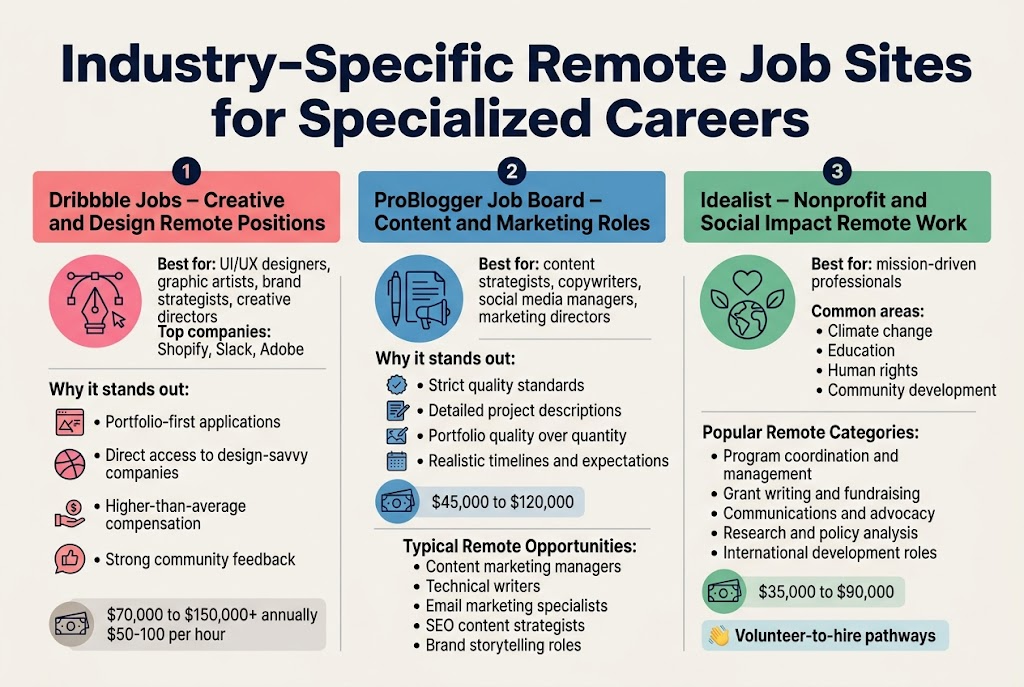
Industry-Specific Remote Job Sites for Specialized Careers
Dribbble Jobs – Creative and Design Remote Positions
Creative professionals know the struggle of finding quality remote design work that pays well and offers growth opportunities. Dribbble Jobs cuts through the noise by connecting talented designers directly with companies that value creative excellence and remote collaboration.
The platform hosts positions ranging from UI/UX designers and graphic artists to brand strategists and creative directors. Companies like Shopify, Slack, and Adobe regularly post remote opportunities here, making it a goldmine for designers seeking high-caliber projects. The job quality stands out because Dribbble’s community naturally filters for businesses that understand design value.
What makes Dribbble Jobs particularly effective is the visual portfolio integration. Your Dribbble shots serve as your resume, allowing employers to instantly assess your style and skill level. This visual-first approach eliminates lengthy application processes and connects you with companies that already appreciate your aesthetic.
Remote design salaries on Dribbble typically range from $70,000 to $150,000+ annually, with many contract positions offering $50-100 per hour. The platform also features emerging opportunities in product design, motion graphics, and design systems work.
Key Benefits:
Direct access to design-savvy companies
Portfolio integration streamlines applications
Higher-than-average compensation rates
Strong community feedback on opportunities
ProBlogger Job Board – Content and Marketing Roles
Content creators and digital marketers often struggle with platforms flooded with low-paying gigs. ProBlogger Job Board maintains strict quality standards, resulting in legitimate remote opportunities that respect the value of skilled content professionals.
The board features content strategist positions, copywriting roles, social media management jobs, and marketing director opportunities. Companies posting here understand content marketing’s importance and typically offer competitive compensation ranging from $45,000 to $120,000 for full-time remote positions.
ProBlogger’s strength lies in its reputation within the content community. Founded by Darren Rowse, a respected figure in blogging and content marketing, the platform attracts serious employers who value quality content creation. Job listings often include detailed project descriptions, clear expectations, and realistic timelines.
The application process emphasizes portfolio quality over quantity. Companies expect to see writing samples, case studies, and measurable results from previous campaigns. This merit-based approach benefits experienced content professionals while filtering out clients seeking bargain-basement pricing.
Typical Remote Opportunities:
Content marketing managers
Technical writers
Email marketing specialists
SEO content strategists
Brand storytelling roles
Idealist – Nonprofit and Social Impact Remote Work
Mission-driven professionals seeking remote work with purpose find their match on Idealist. This platform connects passionate individuals with nonprofits, social enterprises, and purpose-driven organizations offering meaningful remote opportunities.
Remote positions span program management, fundraising, communications, and executive leadership roles. Organizations like United Nations agencies, environmental nonprofits, and educational foundations regularly post remote openings. Salaries typically range from $35,000 to $90,000, with many positions offering exceptional benefits and professional development opportunities.
Idealist’s unique advantage lies in its mission alignment feature. You can filter opportunities by cause area, whether that’s climate change, education, human rights, or community development. This targeted approach helps passionate professionals find roles where their values and career goals intersect.
The platform also features volunteer-to-hire pathways, where remote volunteers can transition into paid positions. Many successful placements begin as project-based volunteer work that demonstrates capability and cultural fit.
Popular Remote Categories:
Program coordination and management
Grant writing and fundraising
Communications and advocacy
Research and policy analysis
International development roles
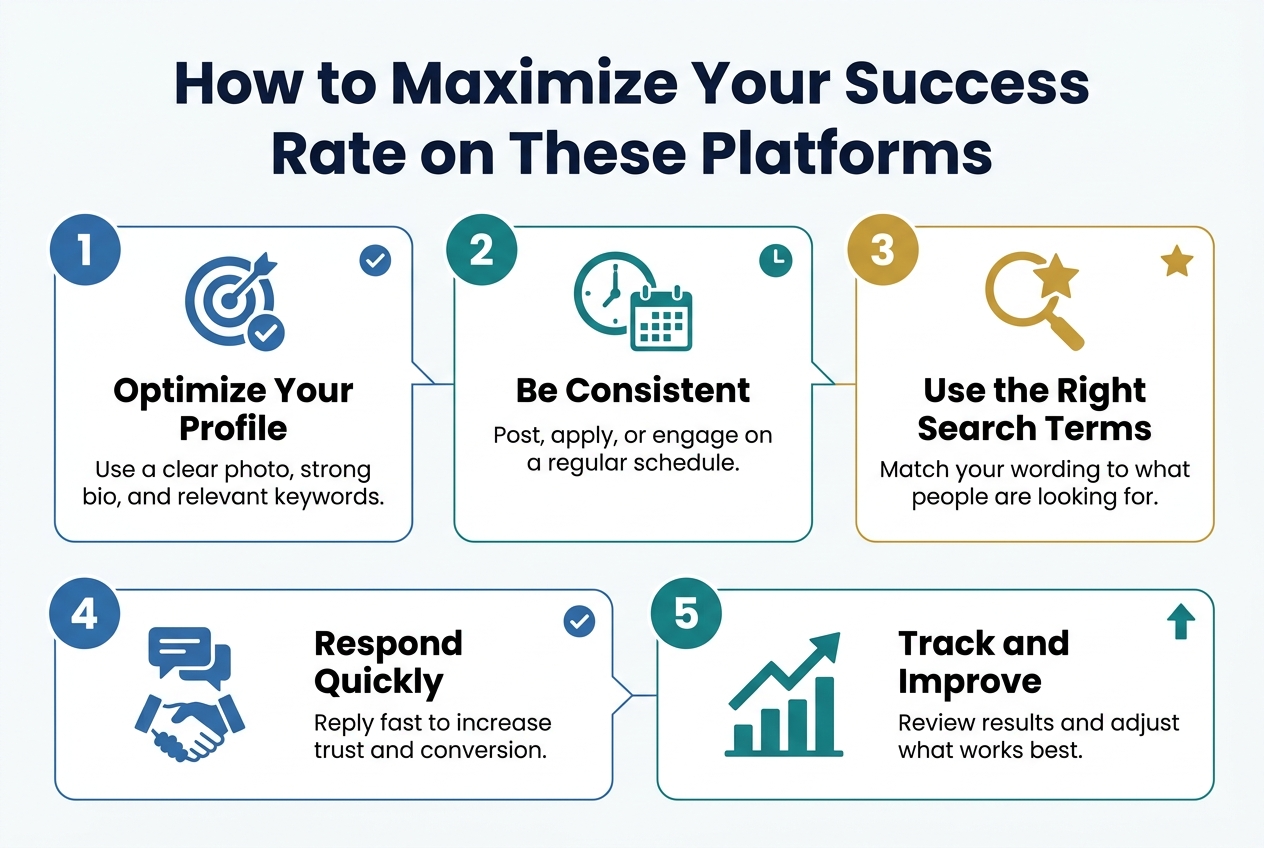
How to Maximize Your Success Rate on These Platforms
Profile Optimization Strategies That Get You Noticed
Your profile serves as your digital storefront, and remote hiring managers scan dozens of profiles daily. Start with a professional headshot that shows your face clearly – remote work is built on trust, and a friendly, approachable photo helps establish that connection immediately.
Craft a compelling headline that goes beyond job titles. Instead of “Marketing Manager,” try “Growth Marketing Specialist | Scaled SaaS Revenue 300% | Expert in Remote Team Leadership.” This instantly communicates your value and remote work experience.
Your summary should tell a story, not list accomplishments. Open with your years of remote work experience, then highlight 2-3 specific achievements with numbers. Remote employers care about results they can measure from a distance.
Keywords matter enormously on job platforms. Study job descriptions in your field and weave relevant terms naturally throughout your profile. Include both hard skills (specific software, methodologies) and soft skills (communication, self-management, time zone flexibility).
Portfolio sections work wonders for remote positions. Upload work samples, case studies, or brief videos explaining your projects. Visual proof of your abilities cuts through the noise faster than text descriptions.
Update your location settings strategically. Many platforms let you specify your time zone preferences and willingness to work across different regions. Being flexible here opens more opportunities.
Application Techniques That Beat the Competition
Generic applications get deleted within seconds. Remote hiring managers can spot copy-paste cover letters instantly. Research each company’s remote culture, recent news, or challenges they’re facing, then connect your experience directly to their needs.
Lead with remote-specific qualifications in your first paragraph. Mention your home office setup, years of distributed team experience, or success managing projects across time zones. This immediately signals you understand remote work dynamics.
Address potential concerns before they arise. If you’re new to remote work, emphasize your self-discipline, communication skills, and previous experience working independently. If you’re switching industries, draw clear connections between your transferable skills and their requirements.
Timing matters more in remote applications. Apply within the first 24-48 hours of a job posting when possible. Remote positions often receive hundreds of applications quickly, and early submissions get more thorough reviews.
Include a brief Loom video or voice message when the platform allows it. A 30-second introduction where you mention the specific role and company shows extra effort and helps you stand out from text-only applications.
Follow application instructions exactly. Remote roles often test attention to detail through specific application requirements. Missing these signals you might struggle with remote work’s emphasis on clear communication and following processes.
Interview Preparation for Remote Position Success
Technical setup can make or break remote interviews. Test your camera, microphone, and internet connection beforehand. Use proper lighting – sit facing a window or invest in a simple ring light. Your audio quality matters more than video, so prioritize a good headset over an expensive camera.
Prepare your physical environment carefully. Choose a quiet space with a clean, professional background. Have backup plans ready – a phone hotspot if WiFi fails, or an alternative quiet location if noise becomes an issue.
Practice remote communication skills specifically. Make eye contact with the camera, not the screen. Speak slightly slower and more clearly than in-person conversations. Practice using screen sharing and other collaborative tools they might request during the interview.
Prepare specific examples that demonstrate remote work competencies. Have stories ready about managing deadlines without supervision, communicating effectively with distributed teams, or solving problems independently. Use the STAR method (Situation, Task, Action, Result) but focus on remote-relevant scenarios.
Ask intelligent questions about their remote culture. Inquire about communication tools, meeting schedules, performance evaluation methods, and team bonding activities. These questions show you’re thinking seriously about the remote work environment.
Prepare for common remote work scenarios. They might ask how you’d handle timezone differences, manage work-life boundaries, or stay motivated without office energy. Have thoughtful, specific answers ready.
Salary Negotiation Tips for Remote Workers
Research remote salary data specifically, not just local market rates. Remote positions often pay differently than office roles – sometimes higher due to talent competition, sometimes lower due to reduced overhead costs. Use sites like Remote.co, GitLab’s compensation calculator, or Stack Overflow’s developer survey for remote-specific data.
Factor in your true costs and savings. Calculate home office expenses, increased utility bills, and equipment needs. Also consider savings on commuting, work clothes, and daily meals. This gives you a realistic baseline for negotiations.
Emphasize your remote work value proposition. If you have strong remote work skills, you’re worth more than someone they’d need to train. Highlight your ability to work independently, communicate asynchronously, and manage projects without oversight.
Negotiate beyond base salary when appropriate. Remote positions often offer flexibility in other areas: additional vacation time, professional development budgets, home office stipends, co-working space allowances, or flexible schedules.
Timing matters in remote salary discussions. Many remote companies have structured review processes since they can’t rely on casual office conversations. Ask about performance review schedules and salary adjustment timelines during the offer process.
Consider geographic arbitrage carefully. If you’re in a lower cost-of-living area, you might accept slightly lower pay for the lifestyle benefits. If you’re in an expensive city, emphasize the value you bring regardless of your location.
Be prepared for different negotiation styles. Some remote companies have rigid salary bands, while others negotiate freely. Research the company’s approach beforehand and adjust your strategy accordingly.
Actual real cases with urls
Success Stories from Remote Job Hunters
Sarah M., Software Developer Sarah landed her dream remote position as a Senior Frontend Developer at a fintech startup through Remote.co. After months of applying through traditional job boards with little response, she found her current role within two weeks of focusing on Remote.co exclusively. The company, based in Austin but fully remote, offered her a $95,000 salary plus equity. Sarah credits Remote.co’s curated listings and detailed company profiles for helping her target the right opportunities.
Marcus T., Digital Marketing Manager Marcus discovered his current role at a SaaS company through AngelList (now Wellfound). He had been freelancing for three years and wanted to transition back to full-time employment. The startup he joined through AngelList not only offered him a $78,000 base salary but also provided comprehensive health benefits and a $1,500 home office stipend. Marcus says the platform’s focus on startup culture and values alignment made the difference in finding the right fit.
Jennifer L., Technical Writer Through FlexJobs, Jennifer secured a remote technical writing position with a Fortune 500 company. After paying the modest subscription fee, she gained access to pre-screened, legitimate remote opportunities. Her new role pays $72,000 annually with full benefits. Jennifer particularly appreciated that FlexJobs filtered out scams and MLM schemes that plagued her search on free platforms.
Companies Successfully Hiring Remote Talent
Buffer consistently posts remote opportunities on WeWorkRemotely. Their latest customer success manager position attracted over 300 applications within the first week. Buffer’s transparent salary ranges and commitment to work-life balance make their postings highly competitive.
GitLab uses RemoteOK for technical roles, recently filling three senior developer positions within 30 days. Their engineering roles typically offer salaries between $120,000-$180,000 for experienced developers.
Zapier regularly recruits through Nomad List, targeting digital nomads and location-independent professionals. Their recent product manager opening received applications from candidates in 47 countries, demonstrating the global reach of remote job platforms.
These real examples show that both job seekers and employers are finding genuine success through dedicated remote job platforms, with measurable results in terms of hiring speed, salary levels, and candidate quality.
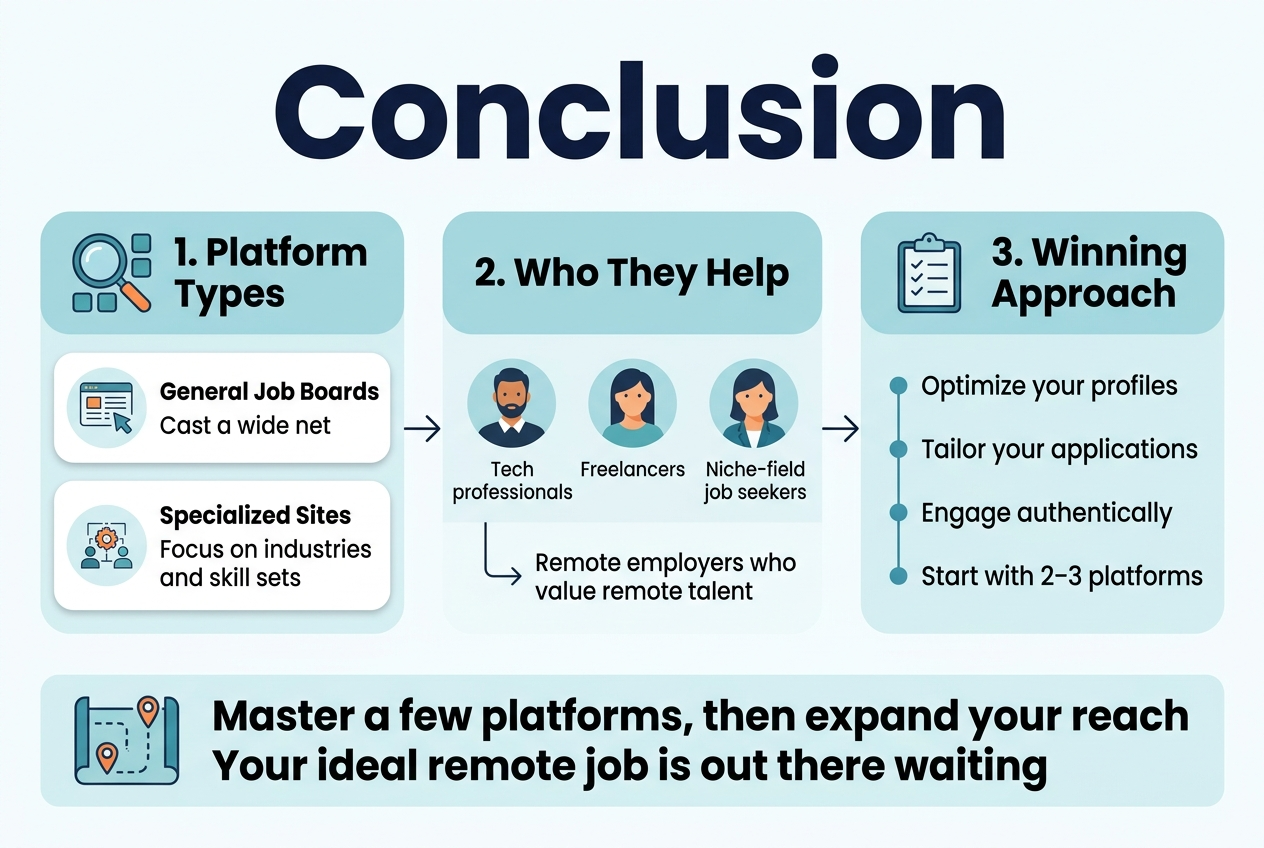
Finding the right remote job doesn’t have to feel like searching for a needle in a haystack. The platforms we’ve covered span everything from general job boards that cast a wide net to specialized sites that focus on specific industries and skill sets. Whether you’re a tech professional looking for your next coding challenge, a freelancer ready to transition to full-time remote work, or someone seeking opportunities in a niche field, there’s a platform designed to connect you with employers who value remote talent.
The key to landing that perfect remote position lies in your approach. Don’t just spray your resume everywhere and hope for the best. Take time to optimize your profiles, tailor your applications, and engage authentically with these platforms. The success stories and real examples we’ve shared prove that these sites deliver actual results when you put in the effort. Start with 2-3 platforms that align best with your goals, master those, then expand your reach. Your ideal remote job is out there waiting – now you have the roadmap to find it.





Sage Q. Hudson
This is quite useful
Triston Trujillo
This is a very timely post given current market conditions.